
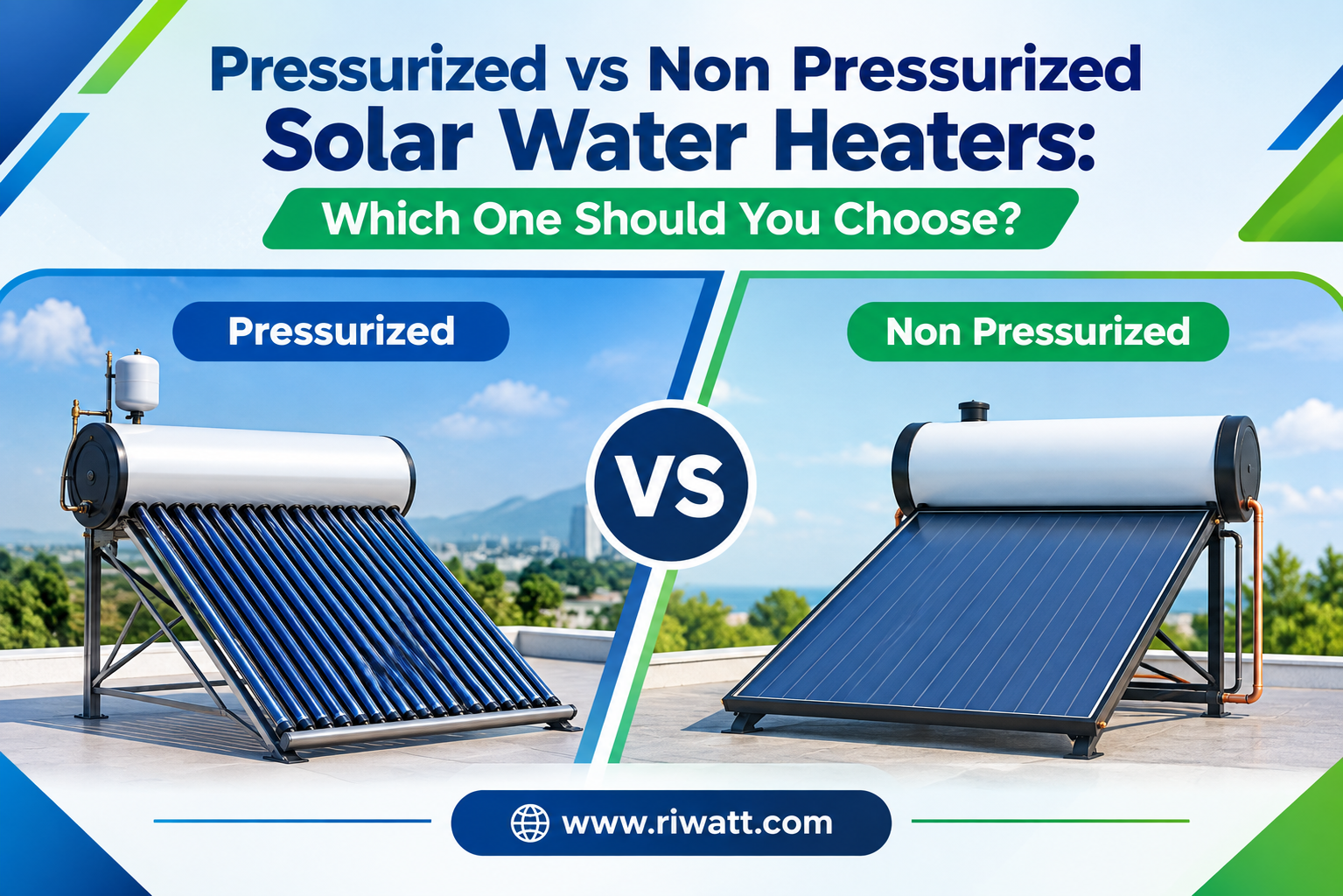
Choosing the right solar water heater depends on water pressure, installation conditions, hot water demand, and system design. In 2025, the global non-pressurized solar water heater market was valued at about US 831.55 million, while the pressurized segment was estimated at around US$ 379-399 million, showing strong demand for both pressurized vs non pressurized solar water heaters types.
The main difference between these systems is how they handle water pressure. Pressurized solar water heaters work with a pressurized water supply, while non-pressurized systems typically use vented tanks and gravity-based water flow. This difference affects water flow, installation, plumbing, maintenance, and overall system cost.
In this guide, we will compare pressurized vs non pressurized solar water heaters by looking at their working principles, advantages, limitations, applications, installation requirements, maintenance needs, and key purchasing factors. We will also explain which system conditions are more suitable for each type.
What Is a Pressurized Solar Water Heater?
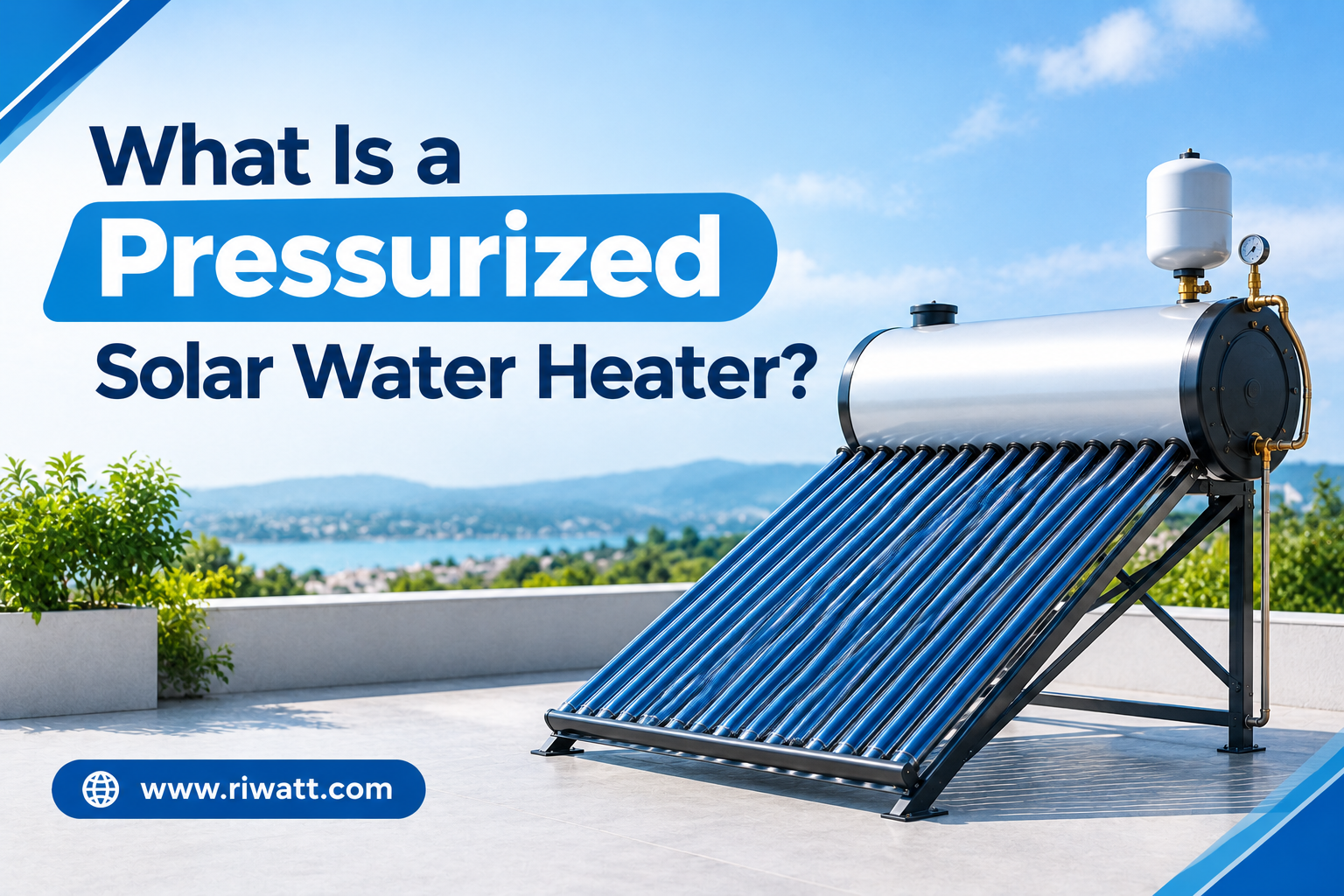
A pressurized solar water heater is designed to operate with water under pressure. The storage tank is generally constructed as a sealed vessel capable of handling the pressure generated by the connected water supply.
When cold water enters the system, solar collectors or evacuated tubes transfer solar energy into the water. The heated water remains inside the storage tank until it is required. Because the tank remains connected to a pressurized plumbing system, hot water can be delivered through faucets, showers, and other outlets with relatively consistent pressure.
Pressurized systems are commonly selected for modern residential buildings, hotels, apartments, villas, and commercial facilities where users expect stronger water flow.
The system may use direct or indirect heating depending on its design. Some systems heat potable water directly, while others use a heat-transfer fluid and a heat exchanger to separate the solar heating circuit from domestic water.
What Is a Non Pressurized Solar Water Heater?
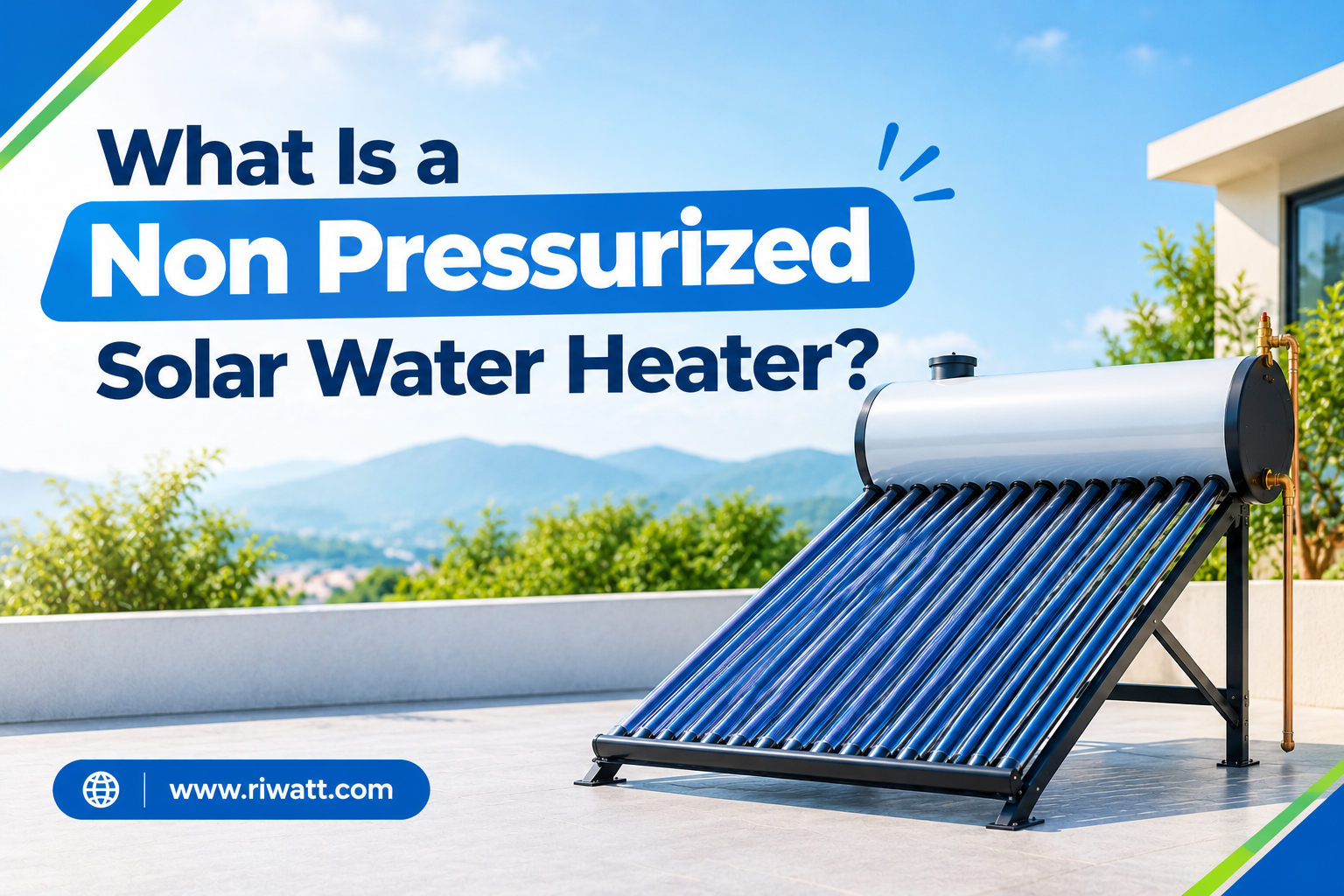
A non pressurized solar water heater is designed to operate without maintaining the storage tank under mains water pressure. The tank is usually vented to the atmosphere, allowing water to enter and leave through a gravity-based or specially designed plumbing arrangement.
These systems are generally simpler than pressurized models. Their storage tanks do not need to withstand the same internal pressure as sealed pressurized tanks. This can reduce system complexity and make them suitable for applications where high water pressure is not necessary.
Non pressurized solar water heaters are often used in residential buildings, rural areas, low-rise properties, and locations where installation simplicity and lower initial cost are important.
However, water pressure at the outlet can be limited by the height difference between the storage tank and the point of use. For this reason, installation height and plumbing design are important considerations.
How Do Pressurized and Non Pressurized Solar Water Heaters Work?
Both systems use solar energy to heat water, but their water delivery systems operate differently.
How a Pressurized System Works
A typical pressurized solar water heater follows several basic stages:
- Cold water enters the pressurized storage tank.
- Solar collectors absorb energy from sunlight.
- Heat is transferred to the water through the selected heating system.
- Hot water is stored inside the insulated tank.
- When a tap or shower opens, pressurized hot water flows toward the outlet.
- New cold water enters the tank to replace the consumed hot water.
The exact circulation method depends on the system design. Some systems rely on natural circulation, while others use pumps and controllers.
The DOE guide discusses active and passive solar water-heating systems, direct and indirect circulation, pumps, heat exchangers, and thermosiphon operation.
How a Non Pressurized System Works
A typical non pressurized system works through a simpler water arrangement:
- Cold water enters the storage tank.
- Solar energy heats the water through the collector or evacuated tubes.
- Hot water rises and remains in the upper part of the tank.
- Hot water moves toward the outlet when required.
- Water flow is mainly controlled by gravity and the elevation of the tank.
Because the tank is not maintained under mains pressure, the plumbing configuration must be designed accordingly.
Pressurized vs Non Pressurized Solar Water Heaters: Key Differences
The following comparison highlights the main differences between these two solar water heating systems.
| Factor | Pressurized Solar Water Heater | Non Pressurized Solar Water Heater |
| Operating pressure | Designed for pressurized water supply | Normally operates without tank pressure |
| Water flow | Generally stronger and more consistent | Depends largely on gravity and installation height |
| Tank design | Sealed and pressure-resistant | Usually vented and non-pressure rated |
| Installation | Requires suitable pressure-rated plumbing | Generally simpler |
| Initial cost | Usually higher | Usually lower |
| Shower performance | Suitable for pressure-demanding showers | May provide lower outlet pressure |
| Maintenance | Can require more components and checks | Generally simpler |
| Applications | Villas, hotels, apartments, commercial buildings | Homes, rural properties, low-rise buildings |
| Plumbing requirements | Requires pressure-compatible components | Requires gravity-compatible plumbing |
| Space requirements | Depends on system configuration | Tank elevation may be important |
These differences do not mean that one system is suitable for every application. The correct choice depends on the building, water supply, usage pattern, installation conditions, and required water pressure.
1. Water Pressure and Shower Performance
Water pressure is one of the most important factors when comparing pressurized vs non pressurized solar water heaters.
A pressurized system can connect directly to a pressurized water network when all components are designed for the required pressure. This can provide stronger flow at showers, faucets, and other outlets.
This characteristic is especially useful in multi-story buildings. Users on upper floors may need reliable water pressure for comfortable showers and fast filling of fixtures.
A non pressurized system usually depends more heavily on gravity. The pressure available at an outlet is influenced by the vertical distance between the water level in the storage tank and the outlet.
For example, a tank installed only slightly above a shower may provide limited pressure. Raising the tank can increase available gravity pressure, but the building structure and installation design must allow this arrangement.
Therefore, buyers should determine the required outlet pressure before selecting a system.
2. Installation Requirements
Installation requirements can differ significantly between pressurized and non pressurized systems.
Pressurized System Installation
A pressurized solar water heater requires components that can safely handle the system’s operating pressure. These may include pressure-rated tanks, valves, pipes, fittings, safety devices, and other components.
Correct installation is essential because the storage tank operates under pressure. Safety equipment should be selected according to the system design and applicable local requirements.
The water supply pressure should also be checked before installation. If incoming pressure is too high, suitable pressure control equipment may be required.
Non Pressurized System Installation
Non pressurized systems generally have simpler plumbing requirements. However, the installation must provide suitable water flow and drainage arrangements.
Tank height is particularly important. Since gravity often controls outlet pressure, the position of the storage tank can directly affect shower and faucet performance.
The installer should also consider roof structure, pipe routing, insulation, access for maintenance, and protection against freezing where applicable.
3. Cost Comparison
Initial purchase cost is another important difference between pressurized and non pressurized solar water heaters.
Pressurized systems generally require stronger tanks and additional pressure-rated components. As a result, the initial equipment and installation cost can be higher.
Non pressurized systems can have a lower initial cost because their tanks and plumbing arrangements are generally simpler. This can make them attractive for price-sensitive residential projects.
However, buyers should avoid comparing systems based only on purchase price.
The total cost can also include installation, transportation, supporting structures, plumbing modifications, maintenance, replacement parts, and energy savings over the operating life of the system.
A system with a higher initial price may still be suitable when stronger water pressure, higher user comfort, or more demanding applications are required.
4. Durability and Maintenance
Both types of solar water heaters can provide long service when properly designed, installed, and maintained. However, their maintenance requirements can differ.
Pressurized systems operate with higher mechanical stress because the tank and associated components must handle internal water pressure. Regular inspection of valves, connections, pressure-related components, and other system parts can help maintain reliable operation.
Non pressurized systems have fewer pressure-related components. This can simplify inspection and maintenance. However, the collector, tank, pipes, insulation, and water quality still require attention.
Hard water can create mineral deposits in certain components. Water quality can also affect heat transfer and system performance over time.
Regular inspection should therefore be included in the system’s maintenance schedule regardless of which type is selected.
5. Energy Efficiency of Pressurized vs Non Pressurized Systems
Pressure type alone does not determine solar water heater efficiency.
Energy performance depends on several factors, including:
- Collector technology
- Collector surface area
- Solar radiation
- Storage tank insulation
- Tank volume
- Water temperature requirements
- Heat losses through pipes
- System circulation
- Installation orientation
- Shading conditions
- Local climate
A well-designed pressurized system can provide efficient solar water heating. Similarly, a properly installed non pressurized system can perform effectively under suitable conditions.
Buyers should therefore evaluate the complete system rather than assuming that pressure type automatically determines efficiency.
For example, a system with high-quality insulation may retain heat better than a poorly insulated system regardless of whether it is pressurized or non pressurized.
Which System Is Better for Residential Use?
Residential requirements vary significantly.
A non pressurized solar water heater can be suitable for homes where the water supply is relatively simple and users do not require high shower pressure. It can also work well in low-rise properties where the storage tank can be positioned at an appropriate height.
A pressurized system may be more appropriate for modern homes with pressurized plumbing, multiple bathrooms, and higher expectations for shower performance.
For larger villas, the required hot water volume should also be considered. A system serving several bathrooms may require careful sizing to maintain adequate hot water availability during periods of high demand.
Homeowners should consider the number of occupants, daily hot water consumption, available roof space, existing plumbing, and local solar conditions before making a final decision.
Which System Is Better for Hotels and Commercial Buildings?
Commercial buildings often have more demanding hot water requirements than individual homes.
Hotels, resorts, apartment buildings, hospitals, restaurants, and other facilities may require hot water at multiple points simultaneously. In these applications, stable water pressure and system capacity become increasingly important.
Pressurized solar water heating systems can be suitable for many commercial installations because they can integrate with pressurized hot water distribution systems.
However, large commercial projects should not be selected based on pressure type alone. Engineers should evaluate peak demand, storage capacity, backup heating, circulation, water quality, safety requirements, and installation conditions.
For larger projects, solar water heating can also be combined with auxiliary heating systems to maintain hot water availability during periods of low solar radiation.
When Should You Choose a Pressurized Solar Water Heater?
A pressurized system may be worth considering when the project has the following requirements:
- Strong Shower Pressure: If users expect stronger water flow from showers and faucets, a pressurized system may provide a more suitable configuration.
- Multi-Story Buildings: Buildings with several floors can benefit from a properly designed pressurized water distribution system.
- Multiple Hot Water Outlets: Homes and commercial buildings with multiple bathrooms or hot water points may require a system designed for pressurized distribution.
- Modern Plumbing Systems: If a property already uses a pressurized plumbing network, integrating a compatible pressurized solar water heater may be more practical.
- Commercial Applications: Hotels, resorts, apartments, and similar facilities may require the water delivery characteristics provided by a pressurized system.
When Should You Choose a Non Pressurized Solar Water Heater?
A non pressurized system can be considered when simplicity and lower initial investment are important.
- Low-Rise Buildings: A gravity-based system can work effectively when the storage tank is positioned at a suitable height.
- Simple Water Systems: Properties with straightforward plumbing requirements may not need a pressurized storage tank.
- Budget-Conscious Projects: Non pressurized systems can offer a simpler solution where high water pressure is not a major requirement.
- Rural or Remote Locations: Where installation resources are limited, a simpler solar water heating arrangement may be easier to install and maintain.
- Basic Domestic Hot Water Requirements: If the building has limited hot water outlets and moderate water pressure requirements, a non pressurized system may be sufficient.
7 Factors to Consider Before Choosing Pressurized Vs Non Pressurized Solar Water Heaters
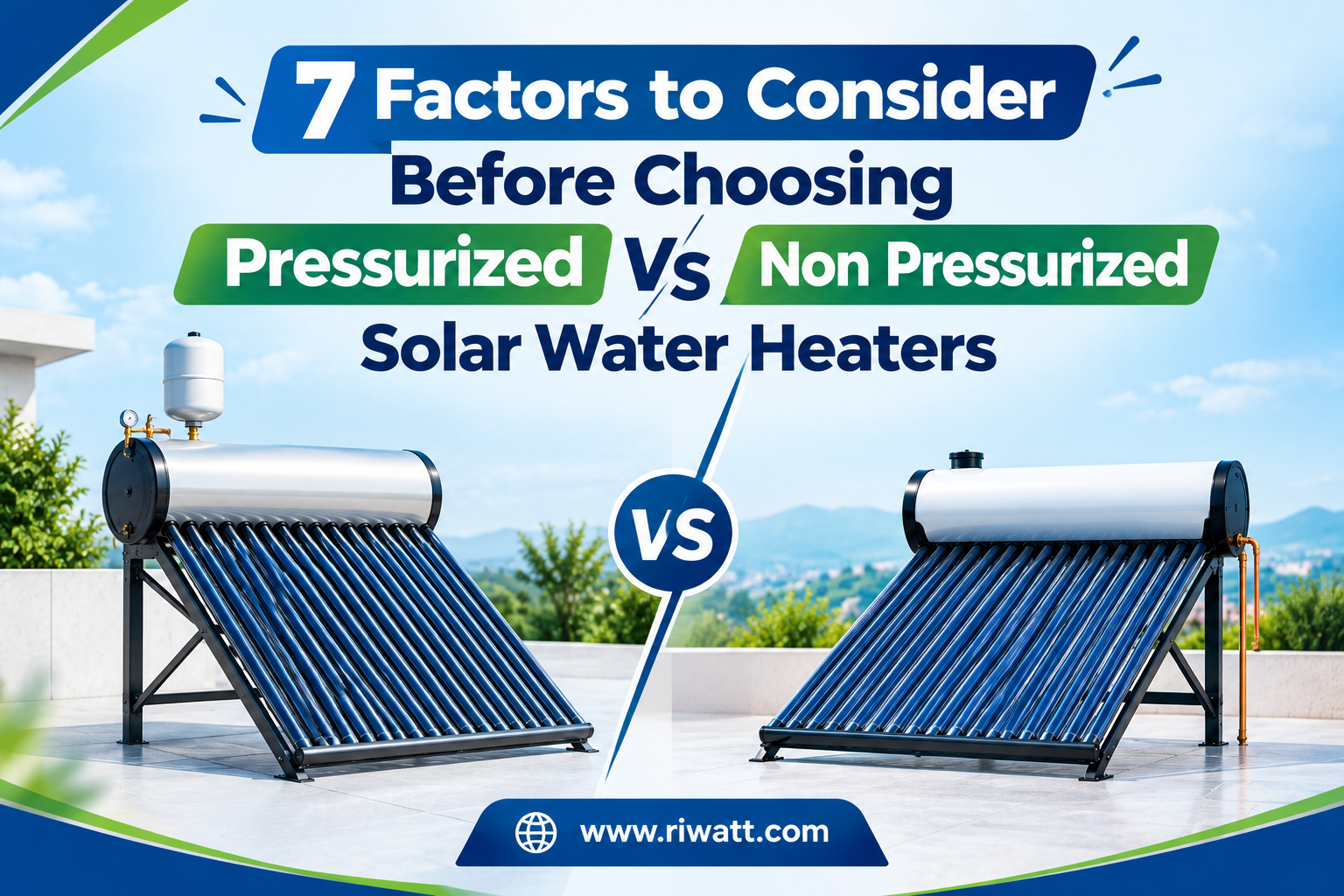
Selecting between pressurized and non pressurized solar water heaters should involve more than comparing product prices. Consider these seven factors before making a purchase.
1. Existing Water Pressure
Check the incoming water pressure at the property. A pressurized system should be matched with suitable pressure-rated components.
2. Hot Water Demand
Estimate how much hot water the building needs each day. Consider the number of users, bathrooms, showers, kitchens, and operating hours.
3. Building Height
For non pressurized systems, tank elevation can directly affect water pressure. Multi-story buildings may require a different system configuration.
4. Available Installation Space
Check the roof area, structural capacity, collector orientation, tank position, and pipe routing before selecting the equipment.
This placement is natural because ENERGY STAR specifically discusses roof suitability, sunlight exposure, system type, capacity sizing, installation, and maintenance.
5. Climate Conditions
Solar radiation and ambient temperature influence the performance of every solar water heating system. Local weather conditions should be considered during system sizing.
6. Water Quality
Hard or mineral-rich water can affect system components and heat transfer surfaces. Buyers should consider suitable materials and maintenance requirements.
7. Long-Term Operating Cost
Compare the complete ownership cost instead of focusing only on the initial purchase price. Installation, maintenance, replacement parts, and energy savings can all influence the long-term value.
Common Mistakes When Choosing a Solar Water Heater
Buyers sometimes select solar water heaters based only on tank capacity or purchase price. This can result in a system that does not match the building’s actual requirements.
One common mistake is selecting a non pressurized system for a property where users expect high shower pressure. Another is choosing a pressurized system without checking whether the plumbing and supporting components can safely handle the required pressure.
Incorrect sizing is another major issue. A tank that is too small may not provide sufficient hot water during peak periods. A system that is unnecessarily large may increase installation costs and occupy additional roof space.
Buyers should also avoid ignoring installation quality. Even high-quality solar water heaters can perform poorly if collectors are incorrectly positioned, pipes are poorly insulated, or the system is not correctly sized.
Which Solar Water Heater Should You Choose?
The right solar water heater depends on the property’s water pressure, hot water demand, plumbing arrangement, installation space, and budget.
A pressurized solar water heater can be considered when stronger water flow, multiple outlets, and pressurized plumbing are important. It is commonly suitable for villas, hotels, apartments, and commercial buildings.
A non pressurized solar water heater may be suitable when gravity-fed water delivery is sufficient and a simpler system is preferred. It can work well for many residential and low-rise applications.
Before making a decision, compare the required water pressure, tank capacity, collector type, installation conditions, water quality, and expected daily hot water consumption. This helps ensure that the selected system matches the actual requirements of the property.
Related Solar Water Heater Resources
Explore these related solar water heater resources to better understand system types, installation requirements, performance factors, and product selection before choosing a suitable solution for your project.
Why Global Distributors Are Partnering with Chinese Solar Water Heater Manufacturers
A Distributor’s Guide to Choosing a Reliable Solar Water Heater Manufacturer
Solar Water Heater VS Heat Pump: Which Is Better for Your Home or Business?
Best Solar Water Heating Systems for Kenyan Hotels and Guest Houses
The Ultimate Buyer’s Guide to Solar Water Heaters in Kenya (2026)
Top 10 Solar Water Heater Brands in Kenya
Solar Water Heater vs Electric Geyser: Which Is Better for Commercial Use?
Why Importers Choose Solar Water Heater Manufacturers in China
Solar Water Heaters in Mauritius: Market Trends, Opportunities & Buyer Guide (2026)
Top 7 Custom Solar Water Heater Factory in China
Final Thought
Choosing between pressurized and non pressurized solar water heaters requires more than comparing their prices. The right system should match the building’s water pressure, hot water demand, plumbing design, installation conditions, and long-term usage requirements.
For homeowners, contractors, distributors, and commercial buyers looking for reliable solar water heating solutions, Riwatt Solar offers solar water heater solutions for different residential and commercial applications. Buyers can contact the Riwatt team to discuss their requirements, product specifications, capacity options, and suitable system configuration.
Looking for the right solar water heater for your project? Contact Riwatt Solar today to discuss your requirements and get a suitable product recommendation and quotation.


Leave A Comment
Your email address will not be published.