

Choosing an energy-efficient water heating system is an important investment for both residential and commercial properties. Rising electricity costs, environmental concerns, and long-term operating expenses have encouraged homeowners and businesses to replace traditional electric water heaters with more efficient alternatives.
Among the most popular options are solar water heater vs heat pump. Both systems significantly reduce energy consumption compared to conventional electric heaters, but they operate using completely different technologies. A solar water heater captures energy directly from sunlight, while a heat pump transfers heat from the surrounding air to warm water.
Each solution offers unique advantages depending on your local climate, available installation space, daily hot water demand, and budget. Selecting the right system requires more than simply comparing purchase prices. Long-term operating costs, maintenance requirements, installation conditions, and expected lifespan should all be considered before making a decision.
This guide provides a detailed comparison between solar water heater vs heat pump. Whether you are a homeowner, hotel operator, contractor, property developer, or industrial buyer, this article will help you determine which system delivers the best value for your specific application.
Solar Water Heater vs Heat Pump: Quick Comparison
| Feature | Solar Water Heater | Heat Pump Water Heater |
| Energy Source | Sunlight | Ambient Air |
| Electricity Consumption | Extremely Low | Low |
| Initial Investment | Higher | Moderate |
| Operating Cost | Very Low | Low |
| Weather Dependence | High | Low |
| Installation Complexity | Medium to High | Medium |
| Performance During Cloudy Days | Lower (without backup) | Stable |
| Environmental Impact | Excellent | Excellent |
| Maintenance | Low | Moderate |
| Average Lifespan | 20–25 Years | 10–15 Years |
| Best For | Sunny Regions | Various Climate Conditions |
What Is a Solar Water Heater?
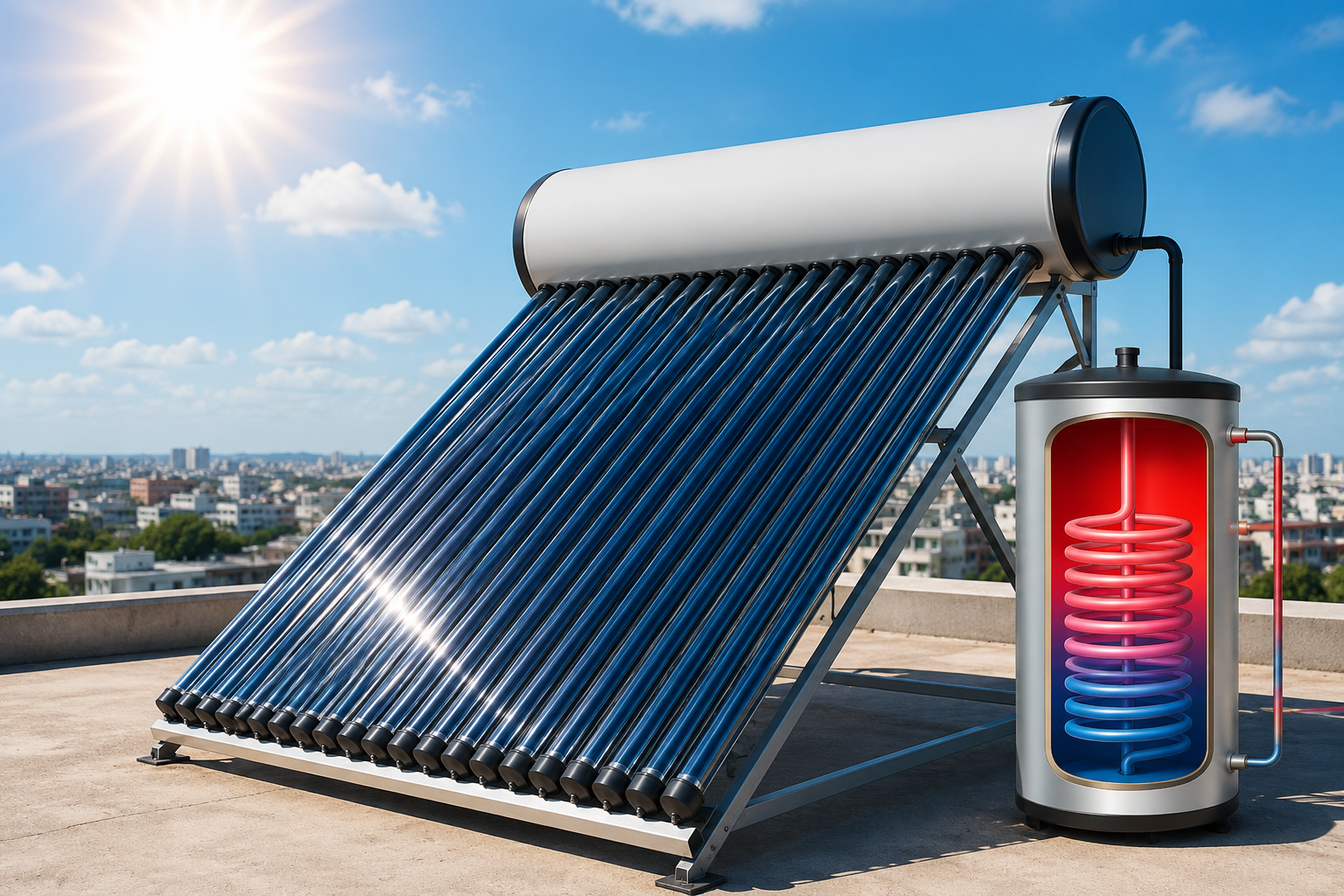
A solar water heater is a renewable energy system that uses sunlight to heat water. Instead of generating heat through electricity or gas, solar collectors absorb solar radiation and transfer that heat to water stored inside an insulated storage tank.
Because sunlight is free, the system can dramatically reduce monthly electricity bills while lowering carbon emissions. In regions with strong solar exposure, a properly designed solar water heater can provide most of a property’s annual hot water requirements.
Solar water heating systems are widely installed in residential buildings, hotels, hospitals, educational institutions, manufacturing facilities, apartment complexes, and commercial properties where hot water demand is consistent throughout the year.
To understand how modern solar thermal technology is evolving, explore our article on Solar Water Heater Vision 2030, which highlights future industry trends and innovations.
Main Components of a Solar Water Heater
A standard solar water heating system includes several essential components that work together to deliver hot water efficiently.
Solar Collectors
Solar collectors capture sunlight and convert solar energy into heat. They are usually installed on rooftops where maximum sun exposure is available.
Common collector types include:
- Flat Plate Collectors
- Evacuated Tube Collectors
- High-efficiency vacuum tube collectors
The collector type influences heating efficiency, durability, and overall system performance.
Insulated Water Storage Tank
The storage tank stores heated water while minimizing heat loss. High-quality insulation helps maintain water temperature for many hours, allowing users to access hot water even after sunset.
Tank capacity depends on daily water consumption.
Typical sizes include:
- 100 Liters
- 150 Liters
- 200 Liters
- 300 Liters
- 500 Liters
- Custom commercial capacities
Circulation System
The circulation system transfers heated water between the collectors and the storage tank.
Depending on system design, circulation may be:
- Natural Thermosiphon Circulation
- Pumped Circulation
- Closed-loop circulation
- Open-loop circulation
The appropriate configuration depends on climate conditions and building requirements.
Backup Heating System
Since solar energy is not available during prolonged cloudy weather or periods of exceptionally high hot water demand, many systems include an electric or auxiliary heating element.
This backup ensures uninterrupted hot water availability regardless of weather conditions.
If you’re planning to invest in a renewable hot water solution, our detailed Solar Water Heater Buying Guide explains the key factors to consider before selecting the right system for your home or business.
What Is a Heat Pump Water Heater?
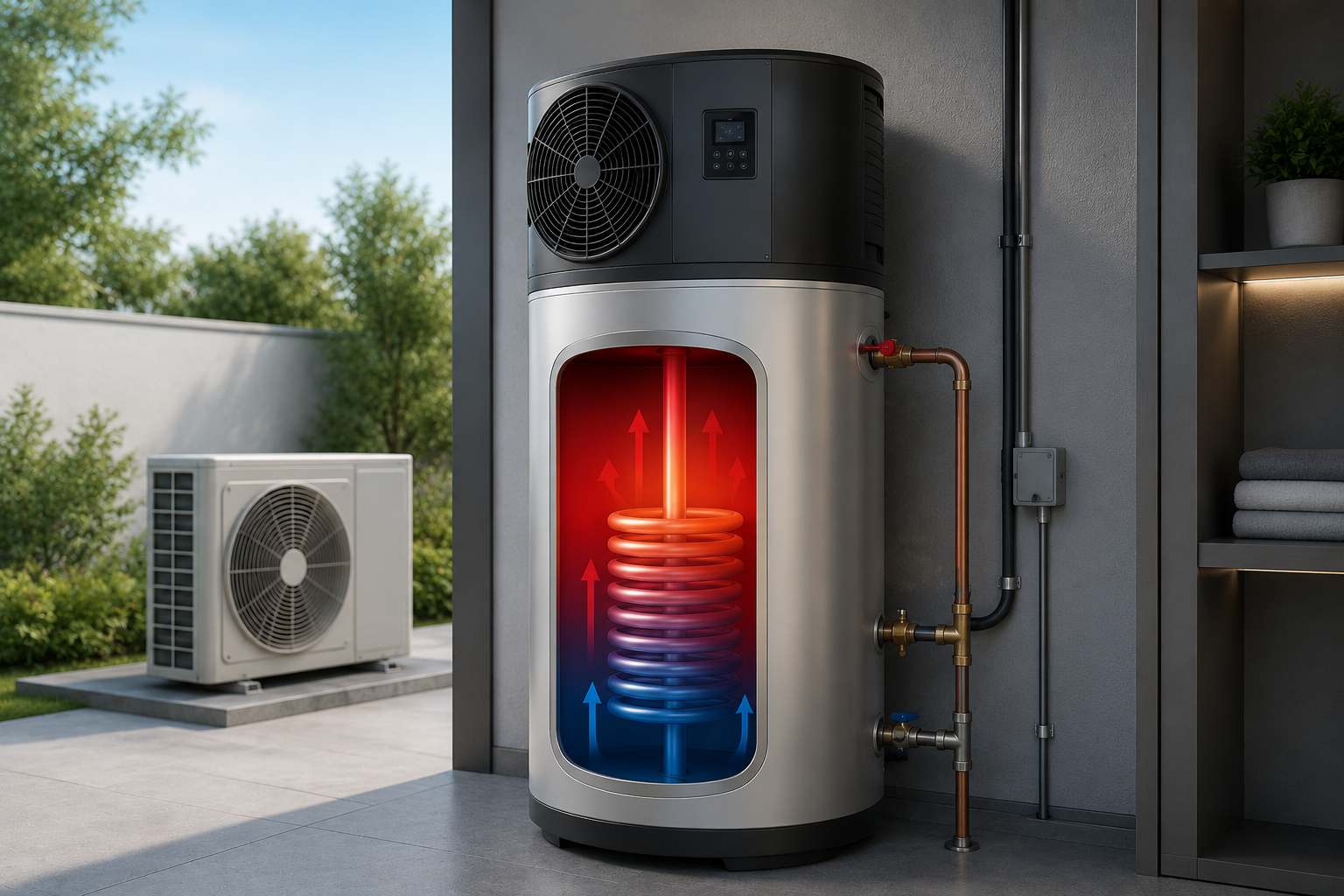
A heat pump water heater uses electricity differently than traditional electric heaters. Instead of generating heat directly, it transfers heat from the surrounding air into the water using refrigeration technology.
This process is similar to how an air conditioner works—but in reverse.
Because it moves existing heat rather than producing it, a heat pump can deliver several units of heat energy for every unit of electricity consumed, making it one of the most energy-efficient water heating technologies available today.
Heat pump water heaters are increasingly used in:
- Residential homes
- Hotels
- Resorts
- Apartment buildings
- Restaurants
- Hospitals
- Office buildings
- Industrial facilities
- Educational institutions
Main Components of a Heat Pump Water Heater
A heat pump water heater consists of several integrated components.
Evaporator
The evaporator absorbs heat from the surrounding air, even when outdoor temperatures are relatively low.
Compressor
The compressor increases the temperature of the refrigerant after it absorbs ambient heat.
This concentrated heat is then transferred to the water.
Condenser
The condenser transfers heat from the refrigerant directly into the stored water inside the tank.
Expansion Valve
The expansion valve lowers refrigerant pressure before it returns to the evaporator, allowing the cycle to repeat continuously.
Water Storage Tank
An insulated storage tank keeps heated water ready for immediate use while minimizing energy loss.
Tank capacities vary according to residential or commercial requirements.
Solar Water Heater vs Heat Pump: A Detailed Comparison
Solar water heater vs heat pump are designed to reduce energy consumption and provide reliable hot water, but they differ in technology, installation requirements, operating costs, and overall performance. Understanding these differences will help you choose the most suitable solution for your home or business.
1. Energy Source
The primary distinction between these two systems is how they generate heat.
A solar water heater captures energy directly from sunlight using solar collectors. It relies on renewable solar radiation to heat water, making it one of the most environmentally friendly water heating solutions available.
A heat pump water heater, on the other hand, extracts heat from the surrounding air. Instead of producing heat through electric resistance elements, it transfers existing heat into the water using a refrigeration cycle.
Winner: Solar Water Heater (for renewable energy use)
2. Energy Efficiency
The U.S. Department of Energy provides additional guidance on selecting energy-efficient water heating systems for residential and commercial applications.
Both solar water heater vs heat pump technologies are far more efficient than conventional electric water heaters, but they perform differently under various conditions.
A solar water heater can deliver extremely high efficiency during sunny days because sunlight is free. Once installed, energy costs are minimal.
Heat pump water heaters typically achieve a Coefficient of Performance (COP) between 3 and 5, meaning they can produce three to five units of heat for every unit of electricity consumed.
If consistent efficiency throughout the year is the priority, heat pumps offer more predictable performance.
Winner: Tie
- Solar excels in sunny climates.
- Heat pumps provide stable efficiency year-round.
3. Initial Installation Cost
Purchase and installation costs are important factors when planning a long-term investment.
Solar water heating systems generally require:
- Solar collectors
- Storage tank
- Mounting structure
- Roof installation
- Water piping
- Optional backup heater
These additional components often increase the initial investment.
Heat pump water heaters usually require fewer installation materials and can often be integrated into existing plumbing systems more easily.
Winner: Heat Pump
4. Operating Cost
After installation, operating expenses become one of the biggest cost considerations.
Solar water heaters use sunlight as their primary energy source, resulting in extremely low electricity consumption.
Heat pump systems still require electricity to operate the compressor and fan, although they consume significantly less power than traditional electric heaters.
Over many years, solar systems generally achieve the lowest operating costs in regions with abundant sunshine.
Winner: Solar Water Heater
5. Performance in Different Weather Conditions
Climate has a major impact on water heating performance.
Solar water heaters work best in areas with consistent sunshine. During prolonged cloudy weather or rainy seasons, water temperature may decrease unless a backup heating system is installed.
Heat pumps continue operating day and night because they extract heat from ambient air rather than direct sunlight.
Modern heat pumps also perform efficiently during mild and moderately cold weather.
Winner: Heat Pump
6. Installation Requirements
Installation conditions vary significantly between the two technologies.
Solar Water Heater
Typically requires:
- Strong roof structure
- Maximum sunlight exposure
- Proper collector orientation
- Adequate roof space
- Professional plumbing installation
Heat Pump Water Heater
Usually requires:
- Good ventilation
- Sufficient airflow
- Utility room or outdoor installation
- Standard plumbing connection
- Electrical supply
Buildings with limited roof space often find heat pump installation more practical.
Winner: Heat Pump
7. Maintenance Requirements
Routine maintenance helps maximize system performance and lifespan.
Solar Water Heater Maintenance
Maintenance typically includes:
- Cleaning collectors
- Inspecting insulation
- Checking pipes
- Testing backup heaters
- Flushing storage tanks
- Preventing scale buildup
Maintenance intervals are generally longer because there are fewer moving parts.
Heat Pump Maintenance
Heat pump systems require:
- Air filter cleaning
- Fan inspection
- Refrigerant system checks
- Compressor servicing
- Coil cleaning
- Electrical inspections
Because they contain mechanical components, maintenance is slightly more frequent.
Winner: Solar Water Heater
8. Lifespan
A longer service life improves the return on investment.
Solar Water Heater
Typical lifespan:
- Collectors: 20–25 years
- Storage tank: 10–15 years
- Overall system: 20+ years with proper maintenance
Heat Pump Water Heater
Typical lifespan:
- Complete system: 10–15 years
- Compressor lifespan depends on operating conditions and maintenance quality.
Winner: Solar Water Heater
9. Environmental Impact
Learn more about the environmental benefits of renewable energy from the International Energy Agency (IEA).
Both solar water heater vs heat pump technologies contribute to lower carbon emissions compared to traditional electric or gas water heaters.
Solar water heaters rely almost entirely on renewable solar energy, making them one of the cleanest water heating options available.
Heat pumps also reduce greenhouse gas emissions by consuming far less electricity than conventional heating systems.
For organizations pursuing sustainability goals or green building certifications, both are excellent choices.
Winner: Solar Water Heater
10. Hot Water Supply Capacity
Reliable hot water availability is critical for homes and businesses.
Solar systems perform exceptionally well during sunny conditions and can meet large daily hot water demands when properly sized. However, output may decrease during extended periods of poor weather unless a backup heater is available.
Heat pump water heaters provide a more consistent supply throughout the day and night, regardless of sunlight.
For facilities that require uninterrupted hot water, heat pumps offer greater reliability.
Winner: Heat Pump
Which System Is Better for Homes?
For residential users, the ideal choice depends on location, budget, and daily hot water usage.
A solar water heater is an excellent option for homeowners living in regions with abundant sunshine. Although the upfront investment is higher, long-term energy savings and minimal operating costs make it a cost-effective solution over time.
A heat pump water heater is better suited for homes that require reliable hot water throughout the year, especially in areas with frequent cloudy weather or limited roof space. It also offers a simpler installation process while delivering excellent energy efficiency.
Solar water heaters are ideal for:
- Independent houses
- Villas
- Rural homes
- Sunny climates
- Long-term homeowners
Heat pumps are ideal for:
- Urban residences
- Apartments
- Homes with limited roof access
- Areas with changing weather conditions
- Families needing consistent hot water
Which System Is Better for Commercial Applications?
Commercial buildings typically have higher and more consistent hot water demands, making system selection even more important.
Hotels, hospitals, schools, gyms, factories, restaurants, and apartment complexes must balance energy savings with reliable performance.
Solar water heaters can significantly reduce operating costs in facilities with ample roof space and strong year-round sunlight. However, many commercial projects combine solar systems with electric or heat pump backup to ensure uninterrupted hot water during periods of low solar radiation.
Heat pump water heaters are often preferred where dependable, all-weather performance is essential. They are particularly effective for businesses that operate around the clock or experience fluctuating weather conditions.
For many large-scale projects, a hybrid system combining solar water heating with heat pump technology delivers the best balance of efficiency, reliability, and long-term cost savings.
Businesses with large-scale hot water demand can also read our guide on Industrial Solar Water Heaters to discover how commercial and industrial facilities benefit from solar heating solutions.
Cost Comparison: Solar Water Heater vs Heat Pump
When evaluating a water heating system, the purchase price is only one part of the investment. Installation costs, electricity consumption, maintenance, and expected service life all contribute to the total cost of ownership.
A solar water heater generally requires a higher initial investment due to the need for solar collectors, mounting structures, insulated storage tanks, and professional roof installation. However, once installed, operating costs are extremely low because the system primarily relies on free solar energy.
A heat pump water heater usually has a lower upfront cost and simpler installation process. Although it consumes electricity, its high efficiency significantly reduces monthly utility bills compared to traditional electric water heaters.
For buyers planning to use the system for many years, evaluating long-term savings rather than only the purchase price is essential.
You can also review international renewable energy resources published by the International Renewable Energy Agency (IRENA).
How to Choose the Right Water Heating System
Selecting the best solution depends on your property’s requirements rather than choosing the most advanced technology.
Consider the following factors before making a decision.
Local Climate
Properties in regions with abundant sunshine can benefit greatly from solar water heaters.
Locations with frequent cloudy weather or seasonal variations may achieve more consistent performance with heat pump systems.
Daily Hot Water Demand
Estimate how much hot water your household or business uses each day.
Higher demand may require larger storage tanks, multiple collectors, or commercial-grade heat pump systems.
Available Installation Space
Solar systems require sufficient roof space with direct sunlight.
Heat pumps require adequate ventilation but generally need much less roof area.
Budget
If minimizing the initial investment is the priority, a heat pump water heater may be the more practical choice.
If long-term energy savings are the primary goal, investing in a solar water heater can provide greater returns over time.
Operating Costs
Evaluate long-term electricity savings instead of focusing only on purchase price.
Lower operating costs often result in substantial financial benefits over the lifespan of the system.
Maintenance Requirements
Choose a system that matches your maintenance capabilities and available service support.
Regular maintenance helps maximize efficiency and extend equipment life.
Why Choose RIWATT for Energy-Efficient Water Heating Solutions?
Whether you’re upgrading a residential property or planning a large commercial project, selecting the right manufacturer is just as important as choosing the right technology.
RIWATT offers a wide range of high-performance water heating solutions designed to meet the needs of homeowners, contractors, distributors, and commercial developers. The company’s products are engineered for energy efficiency, durability, and dependable performance across different climates and applications.
What Sets RIWATT Apart?
- Comprehensive range of solar water heating solutions
- Advanced heat pump water heater technology
- High-quality manufacturing standards
- Reliable performance for residential and commercial projects
- Energy-efficient systems that help reduce operating costs
- Professional technical support and product consultation
- Global export experience and dependable delivery
- Custom solutions for different project requirements
Whether you are building a hotel, apartment complex, hospital, factory, school, or private residence, RIWATT provides solutions designed to improve energy efficiency while lowering long-term operating expenses.
If you’re still comparing different solar water heating solutions, browse our latest expert articles for additional buying advice, installation tips, and product recommendations.
Final Thoughts
Both solar water heater vs heat pump are excellent alternatives to conventional electric water heating systems. Each offers significant energy savings, lower environmental impact, and reduced operating costs, but the right choice depends on your specific requirements.
For many commercial applications, combining solar water heating with heat pump technology can provide the best balance of sustainability, reliability, and cost-effectiveness.
Before making your investment, carefully assess your climate, hot water demand, available installation space, and long-term operating costs. Choosing the right system today can deliver energy savings and reliable hot water for many years to come.
Frequently Asked Questions (FAQs)
Which is more energy-efficient: a solar water heater or a heat pump?
Both are highly energy-efficient. Solar water heaters use free solar energy and can achieve extremely low operating costs in sunny regions, while heat pumps provide consistent efficiency by transferring heat from the surrounding air throughout the year.
Is a solar water heater cheaper to operate than a heat pump?
Yes. In areas with good sunlight, a solar water heater generally has lower operating costs because it relies primarily on renewable solar energy. Heat pumps still consume electricity, although much less than conventional electric water heaters.
Which system is better for commercial buildings?
The best choice depends on the application. Solar water heaters are excellent for buildings with ample roof space and strong sunlight, while heat pumps are ideal where reliable hot water is required in all weather conditions. Many commercial projects use a hybrid solution.
How long does a solar water heater last?
A high-quality solar water heater can last 20–25 years or more with proper installation and routine maintenance. The storage tank may require replacement earlier, depending on usage and water quality.
What is the average lifespan of a heat pump water heater?
Most heat pump water heaters have an expected service life of 10–15 years. Regular maintenance, including cleaning filters and inspecting the refrigeration system, helps extend equipment life.
Do solar water heaters work on cloudy days?
Yes, but their heating performance is reduced during prolonged cloudy or rainy weather. Many systems include an electric backup heater to ensure a continuous supply of hot water when solar energy is limited.
Can a heat pump water heater operate at night?
Yes. Heat pump water heaters extract heat from the surrounding air rather than direct sunlight, allowing them to operate efficiently during both daytime and nighttime.
Which system requires less maintenance?
Solar water heaters generally require less maintenance because they contain fewer moving parts. Heat pump systems need regular filter cleaning, airflow checks, and periodic servicing of mechanical components.
Is a solar water heater environmentally friendly?
Yes. Solar water heaters use renewable solar energy, reduce electricity consumption, and help lower greenhouse gas emissions, making them one of the most environmentally friendly water heating options available.
How do I choose the right water heating system?
Consider your local climate, daily hot water demand, available installation space, budget, maintenance preferences, and long-term energy savings. Consulting an experienced supplier such as RIWATT can help you identify the most suitable solution for your home or business.

Leave A Comment
Your email address will not be published.