
Why Indirect Pressurized Flat Plate Solar Water Heaters Are the Future of Hot Water Systems
As global demand for renewable energy continues to grow, solar water heating systems remain one of the most cost-effective solutions for residential and commercial hot water production.
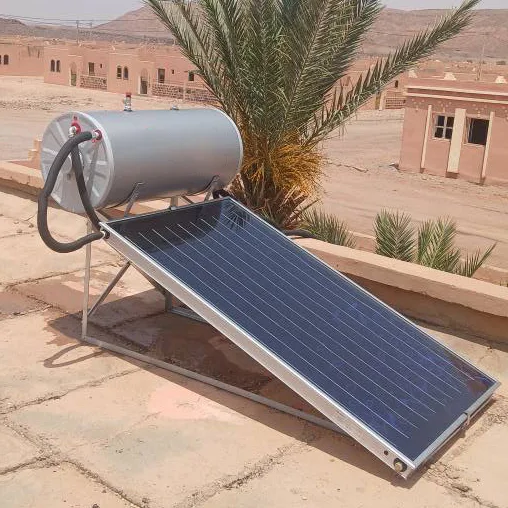
Among various technologies available today, the Integrated Pressurized Flat Plate Solar Water Heater with Enamel Jacket Tank is rapidly gaining popularity across Africa, the Middle East, Turkey, and Southeast Asia.
The reason is simple:
These regions often face challenging water conditions, including high mineral content, hard water, and elevated levels of calcium carbonate. Traditional direct heating solar water systems may provide excellent thermal efficiency, but they often suffer from long-term reliability issues caused by water quality.
This is where indirect heating technology offers a significant advantage.
Understanding Direct Solar Water Heating Systems
A direct solar water heating system uses domestic water as the heat transfer medium.
Cold water enters the storage tank and solar collector directly. The same water circulates through the collector, absorbs solar energy, and returns to the tank as hot water.
Advantages of Direct Systems
Higher thermal efficiency
Faster heat transfer
Lower initial investment
Simpler hydraulic design
Because water is heated directly inside the collector, energy losses are minimal, making direct systems highly efficient.
However, efficiency is not the only factor determining a system’s long-term value.
The Hidden Problem: Hard Water and Scale Formation
In many countries throughout Africa, the Middle East, and parts of Southeast Asia, water contains high concentrations of dissolved minerals such as:
Calcium carbonate
Magnesium
Lime deposits
Various sediments
When water is repeatedly heated, these minerals begin to precipitate and form scale deposits.
Over time, scale accumulates on:
Collector absorber channels
Copper pipes
Storage tank walls
Heat exchange surfaces
Many flat plate collectors utilize small internal flow passages, sometimes as narrow as 8 mm.
As scale builds up, water circulation becomes restricted, reducing heat transfer performance and eventually causing partial or complete blockage.
The consequences include:
Lower heating efficiency
Increased maintenance costs
Reduced hot water output
Shortened collector lifespan
Premature system failure
This problem becomes especially severe in regions with untreated groundwater or municipal water supplies containing high mineral content.

What Is an Indirect Flat Plate Solar Water Heater?
An indirect solar water heater separates the collector loop from the domestic water supply.
Instead of flowing directly through the collector, domestic water remains inside an insulated enamel jacket tank.
A separate heat transfer medium absorbs solar energy from the flat plate collector and transfers heat through the jacket surrounding the storage tank.
This process is known as secondary heat exchange.
How the System Works
Solar radiation heats the flat plate collector.
The heat transfer medium absorbs thermal energy.
The heated medium circulates through the jacket surrounding the enamel tank.
Heat is transferred indirectly to the domestic water stored inside the tank.
Hot water is delivered to household users without direct exposure to the collector circuit.
Because domestic water never enters the collector, scale and corrosion inside the collector are dramatically reduced.
Why Indirect Systems Last Longer
The greatest advantage of indirect technology is protection.
Superior Corrosion Resistance
Domestic water never contacts the collector’s internal passages.
This prevents:
Mineral scaling
Internal corrosion
Pipe blockage
Collector degradation
Better Performance in Hard Water Areas
Indirect systems are ideal for regions where water treatment infrastructure is limited.
Even under poor water quality conditions, the collector remains protected from mineral deposits.
Lower Maintenance Requirements
Reduced scaling means:
Less cleaning
Fewer service calls
Longer operating life
Lower ownership costs
Longer System Lifespan
While a direct system may achieve slightly higher thermal efficiency, an indirect system often delivers significantly longer service life and greater overall reliability.
For many homeowners and project developers, durability is more valuable than a small gain in efficiency.
Why Turkey Became a Strong Market for Indirect Systems
Turkey has been one of the world’s most successful solar thermal markets for decades.
Many Turkish manufacturers and consumers favor indirect solar water heating systems because they understand the long-term impact of hard water on collector performance.
The technology has proven its reliability through years of operation in demanding environments, making it a preferred solution for both residential and commercial applications.
Today, similar market conditions exist across:
Saudi Arabia
Iraq
Jordan
Egypt
Morocco
South Africa
Kenya
Tanzania
Vietnam
Philippines
As awareness increases, indirect systems are expected to gain even greater market share.
Why the Future Looks Bright
The integrated pressurized flat plate solar water heater with enamel jacket tank offers an ideal balance between:
Affordable investment cost
Reliable operation
Corrosion protection
Long service life
Consistent hot water supply
For regions with hard water challenges, the technology provides a practical solution that protects both the collector and the storage tank from the damaging effects of mineral deposits.
As consumers increasingly focus on lifecycle cost rather than initial purchase price, indirect flat plate solar water heaters are becoming one of the most promising solar thermal technologies for emerging markets.
Conclusion
Although direct solar water heating systems deliver excellent efficiency, their long-term performance can be significantly affected by poor water quality.
Indirect pressurized flat plate solar water heaters equipped with enamel jacket tanks provide a smarter and more durable solution. By separating domestic water from the collector circuit, they minimize scaling, reduce corrosion, and extend system lifespan.
For Africa, the Middle East, Southeast Asia, and other hard water regions, indirect technology is no longer just an alternative—it is increasingly becoming the preferred choice for sustainable solar hot water production.
At RIWATT, we are committed to expanding our range of indirect flat plate solar water heaters and sharing more technical insights about this rapidly growing technology in future articles.
FAQ
1: Why should I choose an indirect flat plate solar water heater instead of a direct system?
If your local water contains high levels of calcium, lime, or other minerals, an indirect system is often the better long-term investment. The collector is protected from scale buildup and corrosion, helping extend system life and reduce maintenance costs.
2: Is an indirect flat plate solar water heater suitable for hard water areas?
Yes. Indirect systems are specifically designed to perform well in hard water regions. Since domestic water does not flow directly through the collector, the risk of scale formation, pipe blockage, and collector damage is greatly reduced.
3: Does an indirect solar water heater produce enough hot water for my home?
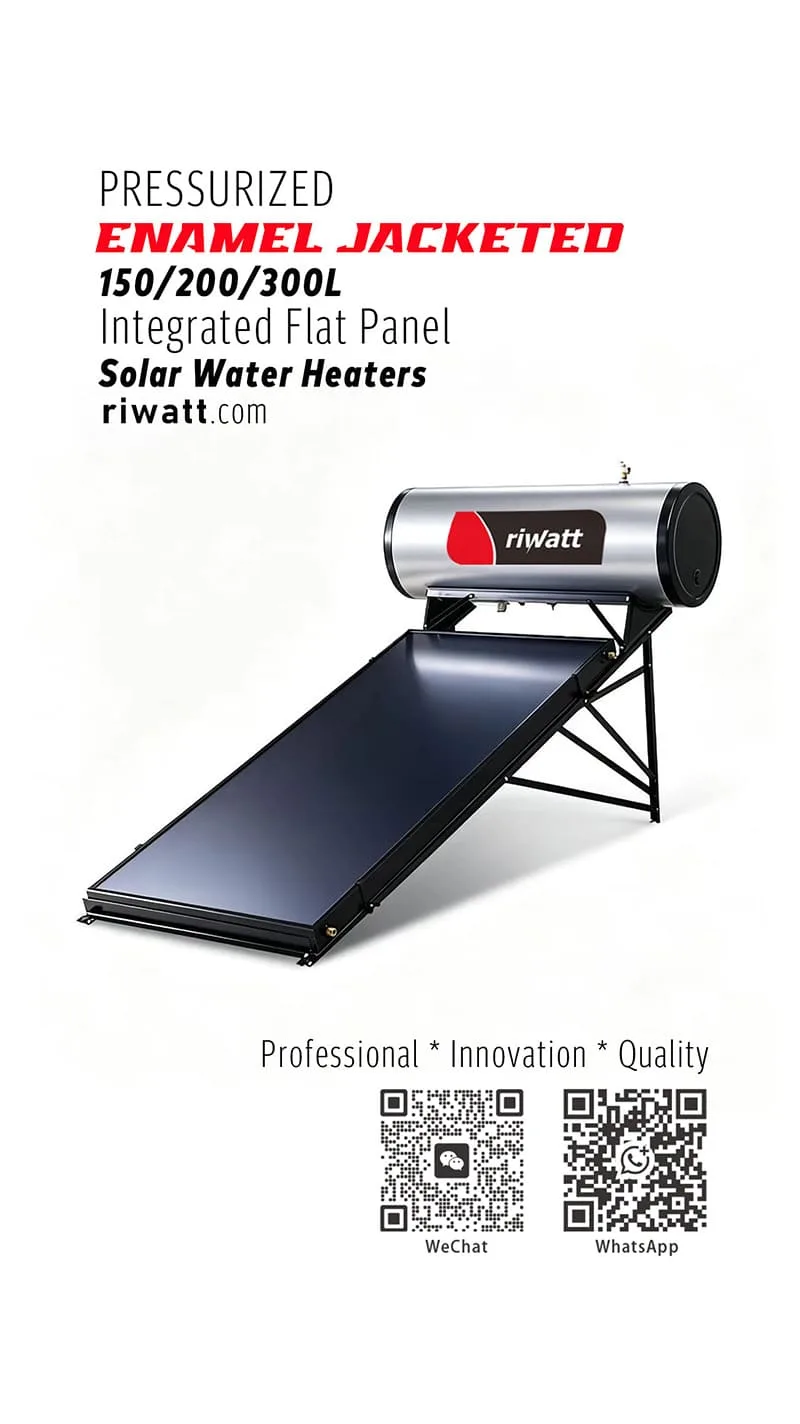
Absolutely. Modern indirect pressurized flat plate solar water heaters provide stable hot water for showers, kitchens, and daily household use. Available capacities such as 150L, 200L, and 300L can meet the needs of most families.
4: Will an indirect system last longer than a direct solar water heater?
In many cases, yes. While direct systems may offer slightly higher thermal efficiency, indirect systems are better protected against corrosion and mineral deposits, resulting in a longer service life and lower ownership costs over time.
5: Is maintenance required for an indirect flat plate solar water heater?
Maintenance requirements are generally lower than direct systems. Because scale and mineral deposits are less likely to accumulate inside the collector, the system can operate more efficiently for longer periods with fewer service interventions.
6: Why are indirect flat plate solar water heaters popular in the Middle East and Africa?
Many regions in Africa and the Middle East face hard water challenges. Indirect systems provide superior protection against scaling and corrosion, making them a reliable and cost-effective solution for long-term hot water production.
7: How do I choose a reliable indirect flat plate solar water heater supplier?
Look for manufacturers that offer enamel-coated tanks, high-efficiency flat plate collectors, quality insulation, and proven export experience. A trusted supplier should also provide technical support, spare parts availability, and warranty coverage for international markets.
Looking for a Durable Solar Water Heating Solution?
RIWATT’s Integrated Pressurized Flat Plate Solar Water Heaters feature advanced enamel jacket tank technology, excellent corrosion resistance, and dependable performance in hard water conditions. Contact us today to learn more about distribution opportunities and wholesale pricing.
Website: www.riwatt.com
WhatsApp: +86 180 0660 1051
Email: info@riwatt.com



Leave A Comment
Your email address will not be published.