
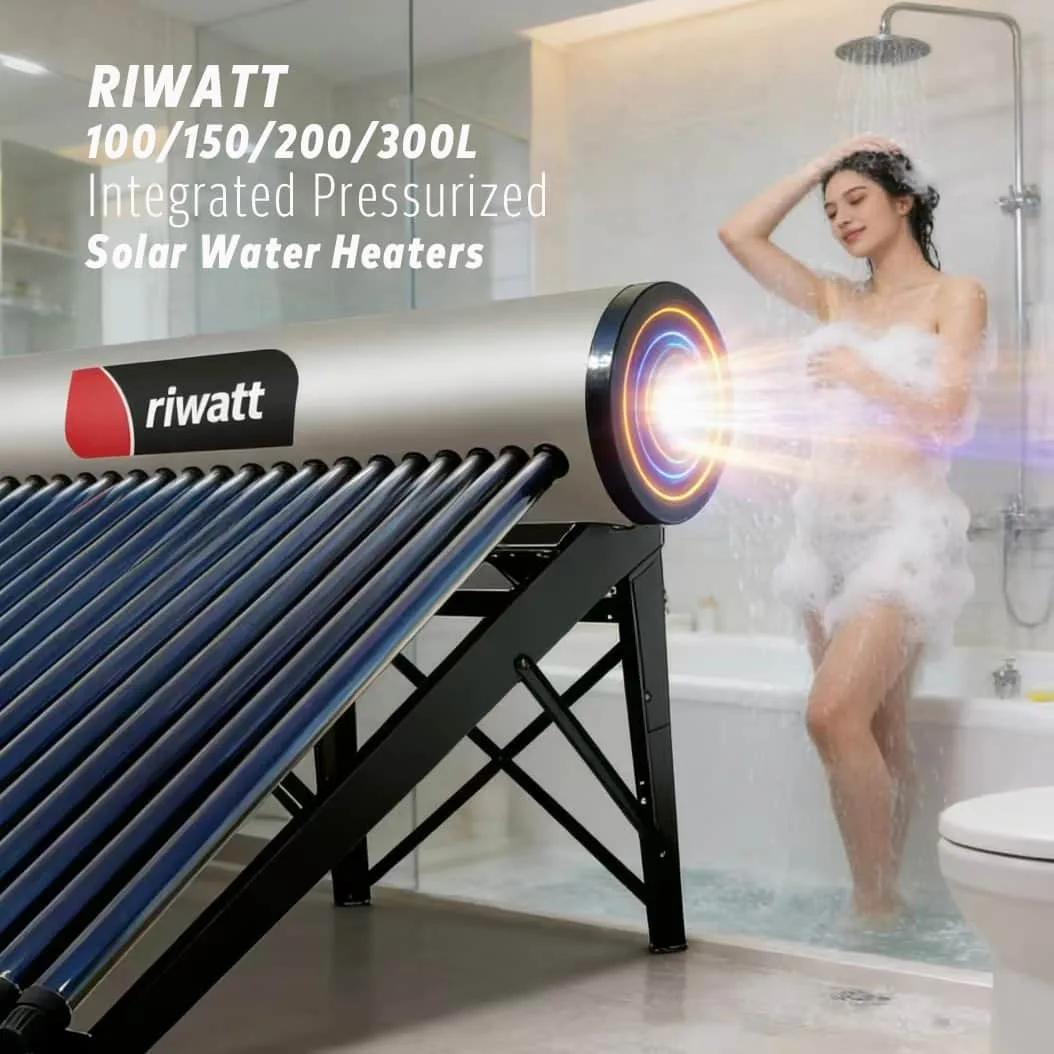
Looking for an efficient and reliable home solar hot water heater? RIWATT offers advanced solutions for every climate, household size, and budget. Compare flat plate, evacuated tube, ICS, and thermosyphon systems to find the perfect fit for your home.
As a sustainability advocate and content creator based in Zhejiang, my mission is to help homeowners worldwide understand the real value of solar energy through honest insights and product showcases from Riwatt.
One of the most common questions I receive is:
“Which home solar hot water heater is the most efficient?”
The answer isn’t one-size-fits-all. Efficiency depends on several factors, including:
●Climate conditions
●Household size
●Hot water usage
●Budget
In this guide, I’ll break down the main types of systems and help you choose the best home solar hot water heater for your needs.
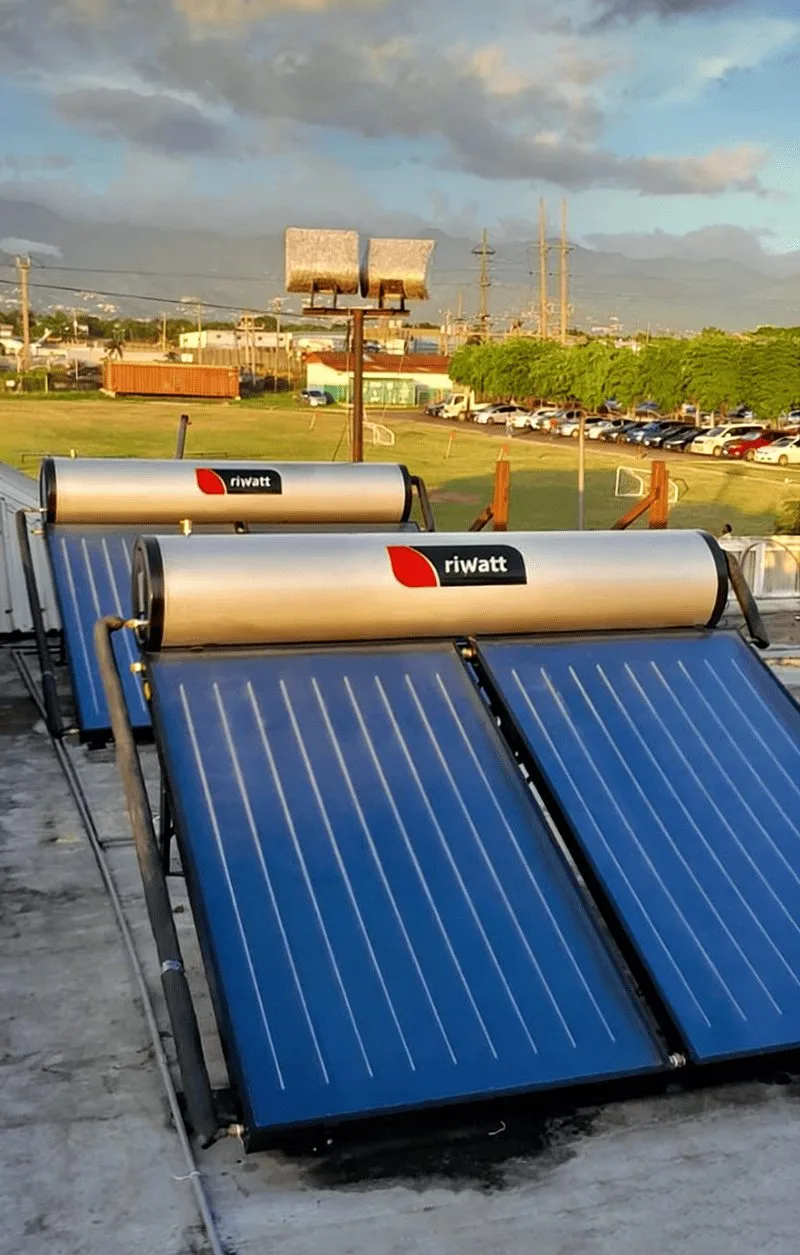
1. Flat Plate Collectors (FPC)
Flat plate systems are the classic choice in solar water heating.
How they work:
A dark absorber plate captures sunlight
Heat transfers to water or antifreeze fluid
Heated fluid flows to a storage tank
Advantages:
Simple and highly reliable
Cost-effective
Performs well in strong sunlight
Works even on cloudy days
Limitations:
Heat loss in cold climates
Requires insulation or antifreeze in freezing areas
Best for: Warm and sunny regions
2. Evacuated Tube Collectors (ETC)
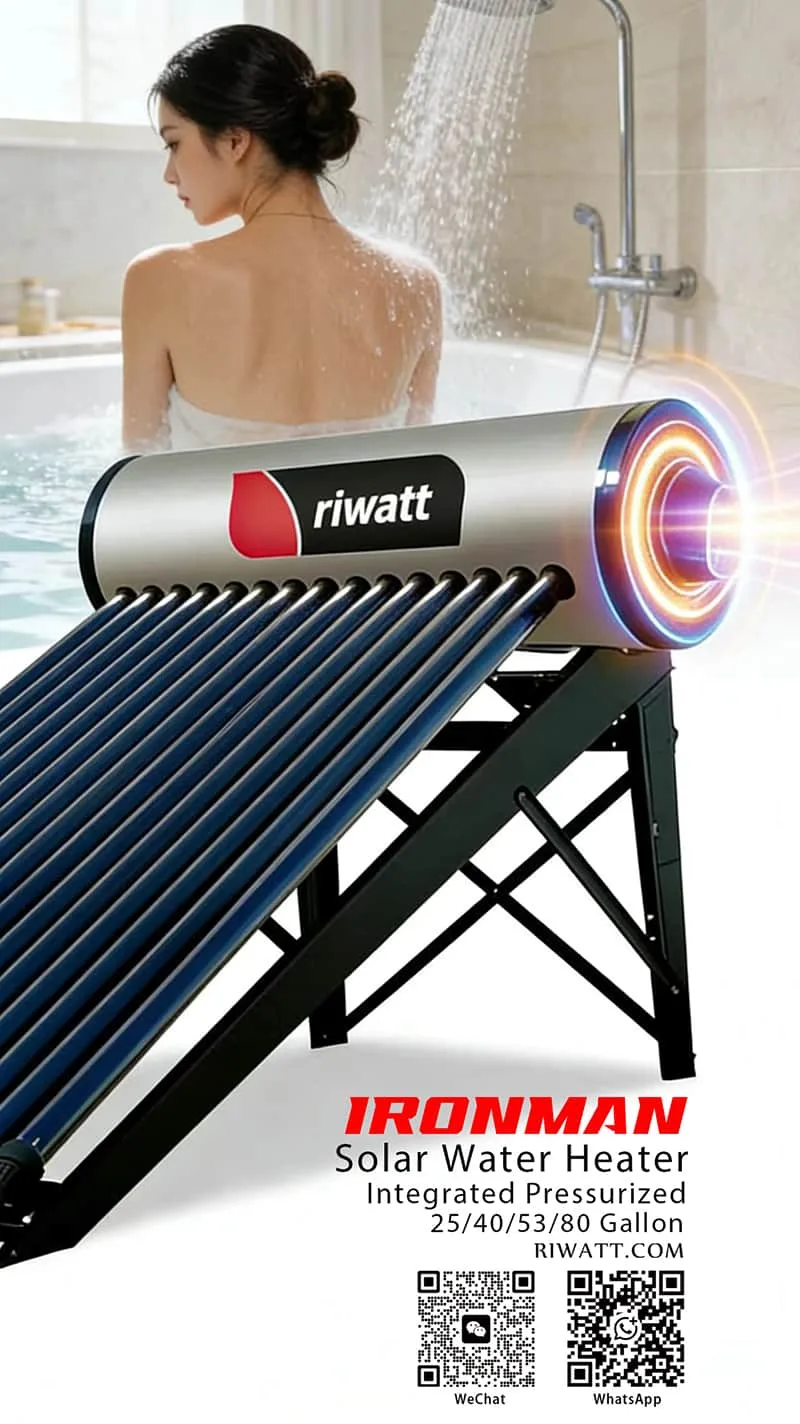
Evacuated tube systems are the most efficient home solar hot water heater technology in many scenarios.
How they work:
Glass tubes with vacuum insulation minimize heat loss
Inner absorber captures solar energy efficiently
Advantages:
Excellent performance in cold and cloudy climates
Higher thermal efficiency
Better heat retention
Performs well year-round
Limitations:
Higher upfront cost
Glass tubes require careful handling
Best for: Cold climates, high-demand households, premium efficiency
3. Integral Collector Storage (ICS) Systems
Also known as batch systems, these combine collection and storage in one unit.
Advantages:
Simple design
Easy installation
Low cost
Limitations:
Limited hot water capacity
Risk of freezing in cold climates
Best for: Small homes in mild climates
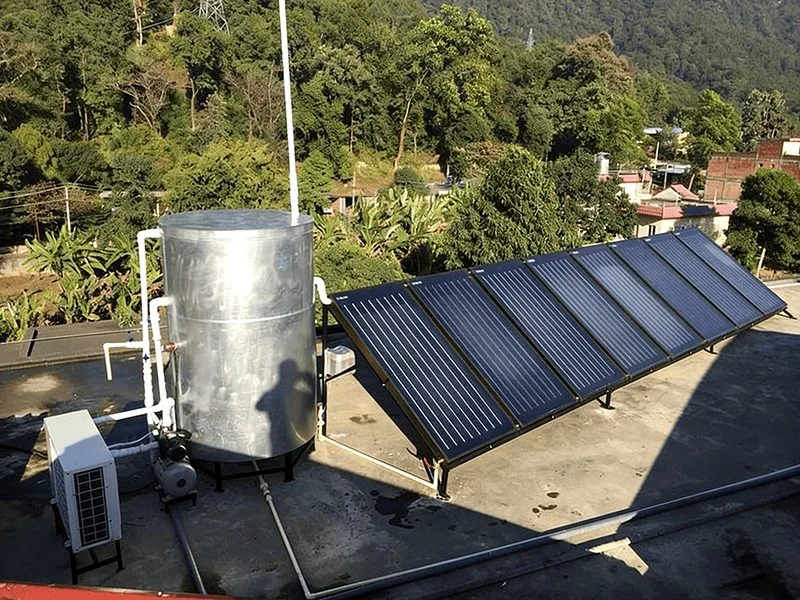
4. Thermosyphon Systems
A popular and efficient home solar hot water heater design using natural circulation.
How they work:
Heated water rises naturally to the tank
Cooler water flows down to the collector
Advantages:
No pump required
Energy-saving and low maintenance
Reliable operation
Limitations:
Tank must be installed above the collector
Installation constraints
Best for: Residential use with proper roof structure
Efficiency Comparison by Scenario
Hot & Sunny Climates
Best choice: Flat Plate Collectors
Cost-effective and reliable
Evacuated tubes offer extra performance if budget allows
Cold & Cloudy Climates
Best choice: Evacuated Tube Collectors
Superior insulation and heat retention
Consistent hot water supply in winter
Small Households
ICS or thermosyphon systems are sufficient
Lower investment, simple setup
Large Households (6+ people)
High-capacity evacuated tube systems recommended
Designed for continuous hot water demand
Additional RIWATT Options
Non-Pressure Home Solar Hot Water Heater
Gravity-fed system
Simple and cost-effective
Ideal for basic residential use
Color Steel Solar Water Heater
Durable and corrosion-resistant
Modern, attractive design
Combines efficiency with aesthetics
Final Verdict: Which Is the Most Efficient?
For most applications:
Evacuated tube systems are the most efficient home solar hot water heater, especially in challenging climates.
However, the best system depends on your specific needs:
●Choose flat plate for affordability in sunny regions
●Choose evacuated tubes for maximum efficiency
●Choose thermosyphon or ICS for simplicity and small households
Why Choose RIWATT?
At RIWATT, we specialize in high-performance home solar hot water heater systems designed for global markets.
✔ Advanced solar water heating technology
✔ Durable materials (stainless steel & anti-corrosion design)
✔ Cost-effective solutions
✔ Suitable for residential and commercial applications




Leave A Comment
Your email address will not be published.