
As electricity prices continue to rise in Kenya, more homeowners and businesses are looking for cost-effective and sustainable ways to meet their hot water needs. Solar water heaters have become one of the most practical solutions because they utilize free solar energy to provide hot water throughout the year while significantly reducing electricity bills.
Kenya enjoys abundant sunshine across most regions, making solar water heating an ideal investment for residential, commercial, and institutional applications.
Whether you own a house, apartment complex, hotel, hospital, school, or commercial building, installing a solar water heater can help lower operating costs and reduce dependence on conventional energy sources.
This guide provides a complete overview of solar water heaters in Kenya, helping buyers understand available options and make informed purchasing decisions in 2026.
Why Solar Water Heaters Are Growing Rapidly in Kenya
Kenya is witnessing increasing adoption of solar water heating systems as energy costs continue rising. Homeowners and businesses are seeking efficient solutions that can reduce operating expenses while providing reliable hot water.
The country’s strong solar resources make solar water heaters a practical investment for residential and commercial applications. As awareness of renewable energy grows, demand for solar heating systems continues to expand across multiple sectors.
- Lower Energy Costs: Solar water heaters help reduce electricity consumption and lower monthly utility bills.
- Abundant Sunshine: Kenya receives strong sunlight throughout the year, supporting efficient solar water heating.
- Sustainable Energy Solution: Solar heating reduces carbon emissions and promotes the use of renewable energy.
- Growing Commercial Adoption: Hotels, schools, hospitals, and businesses increasingly invest in solar water heating systems.
- Long-Term Cost Savings: Quality solar water heaters provide years of reliable performance with minimal operating costs.
As energy efficiency becomes a priority, solar water heaters continue gaining popularity across Kenya. Their ability to deliver long-term savings and environmental benefits makes them a preferred choice for many buyers.
How Does a Solar Water Heating System Work?
A solar water heating system works by capturing energy from sunlight and converting it into heat. Solar collectors absorb solar radiation during the day and transfer that heat to the water circulating through the system.
Solar water heating systems provide an energy-efficient method for generating hot water using renewable solar energy. These systems are widely used in residential and commercial buildings due to their reliable performance and long-term cost savings.
The heated water is then stored inside an insulated tank. High-quality insulation helps maintain water temperature for extended periods and reduces heat loss, ensuring hot water remains available when needed.
When a user opens a hot water tap, the heated water flows from the storage tank through the plumbing system. This process provides a reliable hot water supply while reducing dependence on electricity or other conventional energy sources.
Types of Solar Water Heaters
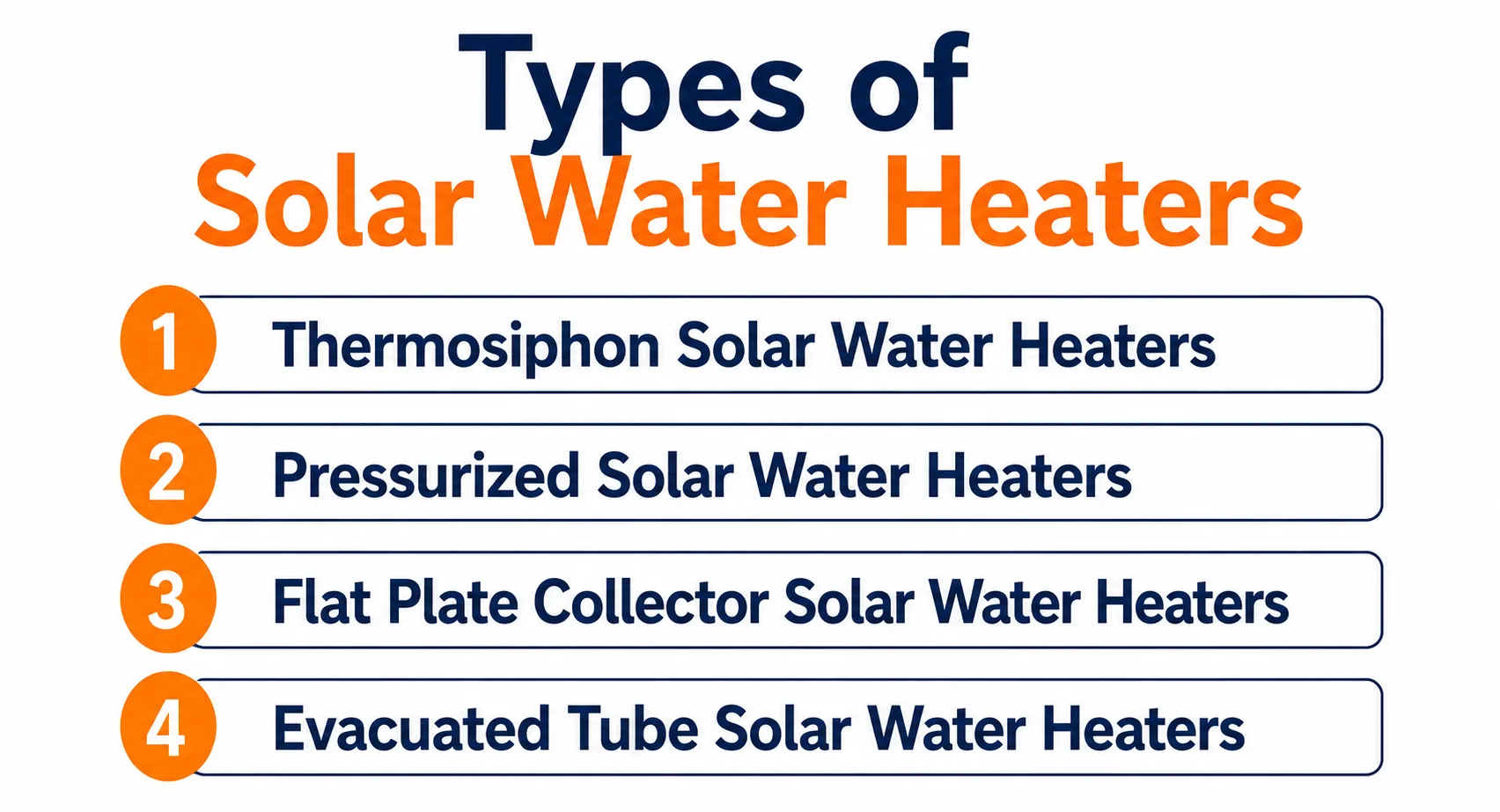
Different solar water heater technologies are available in Kenya. Each system offers unique advantages, performance characteristics, and application suitability.
Thermosiphon Solar Water Heaters
Thermosiphon solar water heaters use natural water circulation without requiring pumps. They are affordable, easy to install, and suitable for residential homes with moderate hot water demand and limited budgets.
Pressurized Solar Water Heaters
Pressurized solar water heaters provide strong water pressure and consistent hot water supply. They are commonly used in modern homes, apartments, hotels, and buildings with multiple bathrooms.
Flat Plate Collector Solar Water Heaters
Flat plate collector systems use durable absorber plates to capture solar energy. They offer reliable performance, long service life, and are suitable for residential and commercial applications.
Evacuated Tube Solar Water Heaters
Evacuated tube solar water heaters use vacuum tube technology to maximize heat absorption. They provide excellent efficiency, reduced heat loss, and reliable performance in varying weather conditions.
Comparison of Residential vs Commercial Solar Water Heaters
Residential and commercial solar water heaters are designed for different usage requirements. Understanding their key differences helps buyers select the most suitable system for their specific application.
| Feature | Residential Solar Water Heaters | Commercial Solar Water Heaters |
| Capacity | 100L–300L | 500L+ or Customized |
| Users | Families and Homes | Hotels, Hospitals, Schools |
| Installation Size | Smaller Systems | Large-Scale Systems |
| Hot Water Demand | Moderate Daily Usage | High Daily Consumption |
| Initial Investment | Lower Cost | Higher Investment |
| Best Application | Houses and Apartments | Commercial and Institutional Projects |
Common Applications of Solar Water Heaters in Kenya
Solar water heating systems are widely used across multiple industries and building types in Kenya.
Common applications include:
- Residential homes
- Apartment buildings
- Hotels and resorts
- Hospitals and healthcare facilities
- Schools and universities
- Commercial office buildings
- Industrial projects
As energy costs continue increasing, more businesses are integrating solar water heating systems into their operations to improve energy efficiency and reduce operational expenses.
Essential Tips for Choosing a Reliable Solar Water Heater Installer in Kenya
Choosing the right installer is just as important as choosing the right system. A skilled installer ensures proper setup, long-term performance, and maximum energy savings for your investment.
1: Check Qualifications and Certifications
Always verify that the installer holds relevant technical certifications. Certified professionals follow industry standards, ensuring your solar water heater is installed safely, correctly, and in compliance with local regulations.
2: Review Their Experience
Choose an installer with proven experience in solar water heating systems. An experienced professional has handled various installations, understands common challenges, and delivers reliable results that protect your investment over time.
3: Ask for References and Past Work
Request references from previous clients or examples of completed projects. Speaking with past customers gives you honest insight into the installer’s workmanship, professionalism, punctuality, and overall quality of service.
4: Compare Multiple Quotations
Never settle for the first quote you receive. Comparing at least three quotations helps you understand fair market pricing, identify what is included in each offer, and avoid overpaying unnecessarily.
5: Confirm Warranty and After-Sale Support
A trustworthy installer should offer a workmanship warranty alongside the product warranty. Strong after-sale support means any installation issues will be resolved quickly without additional costs to you.
6: Verify Product Knowledge
Your installer must understand different solar water heater types, brands, and capacities. Strong product knowledge ensures they recommend the most suitable system for your specific location, budget, and daily hot water requirements.
7: Assess Communication and Professionalism
From the first interaction, observe how promptly and clearly the installer communicates. A professional who listens carefully, answers questions honestly, and maintains transparency throughout the process is always a reliable choice.
Future Outlook of the Solar Water Heating Industry in Kenya
Kenya’s solar water heating industry is entering a period of sustained growth driven by rising energy costs, urban development, and increasing environmental awareness. As more consumers seek alternatives to traditional water heating methods, demand for solar solutions is expected to expand across both residential and commercial sectors.
According to industry data, Kenya receives over 5 kWh/m² per day of solar irradiation, making it one of the most suitable markets in Africa for solar water heating adoption.
Several trends are likely to shape the market in the coming years:
- Increased adoption of renewable energy technologies
- Growing demand from hotels and commercial facilities
- Higher investment in energy-efficient buildings
- Development of smart solar water heating systems
- Expansion of large-scale solar hot water projects
These factors position solar water heaters as an increasingly important component of Kenya’s sustainable energy future.
Why Global Buyers Import Solar Water Heaters from China
China has become one of the world’s leading manufacturing hubs for solar water heaters. International distributors, contractors, and project developers source products from China because of its advanced manufacturing infrastructure and competitive pricing.
According to industry research, China dominates global solar water heater manufacturing with key production hubs in Zhejiang, Guangdong, Jiangsu, and Shandong provinces, offering streamlined supply chains and highly competitive pricing for international buyers.
Chinese manufacturers offer several important advantages:
- Large-scale production capacity
- Competitive factory-direct pricing
- Wide product variety
- Flexible customization solutions
- Stable export capability
- Consistent manufacturing quality
These strengths make China one of the most attractive sourcing destinations for global solar water heater buyers.
Why Riwatt is a Preferred Solar Water Heater Manufacturing Partner
Once you decide to source from China, the next critical step is choosing the right manufacturer — because not all suppliers deliver the same level of quality, reliability, and support.
This is where Riwatt stands apart.
Riwatt has built its reputation over years of focused experience in solar water heating manufacturing. Unlike general-purpose factories that produce multiple unrelated products, Riwatt specializes specifically in solar water heating — which means deeper expertise, better engineering, and a more committed after-sales relationship.
Key reasons buyers choose Riwatt:
- Extensive solar water heating manufacturing experience
- OEM and ODM customization capabilities
- Strict quality inspection procedures at every production stage
- Competitive factory-direct pricing with no hidden costs
- Professional technical support from inquiry to installation
- Proven global export experience across multiple continents
Whether you are a distributor looking to build your product line, a contractor sourcing for a large project, or a developer exploring long-term supply partnerships — Riwatt offers the reliability, flexibility, and expertise to make your sourcing seamless and successful.
Final Thoughts
Solar water heaters offer a practical and cost-effective solution for meeting hot water needs in Kenya. By selecting the right system type, capacity, and supplier, buyers can achieve long-term energy savings while ensuring reliable performance. As solar technology continues advancing and demand grows, solar water heating remains a smart investment for both residential and commercial applications.
Planning to source solar water heaters from China? Riwatt offers reliable manufacturing, customized solutions, and dedicated support for distributors, contractors, and project buyers worldwide.
FAQs
Q1: Are Solar Water Heaters Worth Buying in Kenya?
Answer: Yes, solar water heaters are worth buying in Kenya due to the country’s strong sunlight availability. They help reduce electricity costs, provide reliable hot water, and offer long-term savings for households and businesses.
Q2: How Much Does a Solar Water Heater Cost in Kenya?
Answer: The cost depends on capacity, system type, and product quality. Residential systems generally cost less than commercial installations. Additional expenses may include installation, accessories, and transportation requirements.
Q3: How Much Electricity Can a Solar Water Heater Save?
Answer: Solar water heaters can significantly reduce electricity consumption used for water heating. Actual savings vary by usage patterns, system efficiency, and local climate conditions throughout the year.
Q4: How Soon Can a Solar Water Heater Pay for Itself in Kenya?
Answer: Most solar water heaters recover their initial investment within two to four years through electricity savings. After that period, the system continues providing free hot water with minimal operating costs.
Q5: How Long Does It Take to Install a Solar Water Heater?
Answer: Most residential solar water heaters can be installed within one day. Larger commercial systems may require additional time depending on project size, complexity, and installation conditions.
Q6: Is a Solar Water Heater Better Than an Electric Water Heater?
Answer: Solar water heaters generally offer lower operating costs because they use renewable energy. Electric water heaters have lower initial costs but typically result in higher long-term electricity expenses.
Q7: How Do I Know If My Roof Is Suitable for Solar Water Heater Installation?
Answer: Most rooftops are suitable for solar water heater installation. A professional installer will assess your roof structure, orientation, and available space to determine the best positioning for maximum solar energy absorption.
Q8: Is It Expensive to Maintain a Solar Water Heater in Kenya?
Answer: Maintenance costs for solar water heaters are generally low. Periodic cleaning of collectors and basic system inspections are usually sufficient to keep the system running efficiently throughout its lifespan.
Q9: Can a Solar Water Heater Be Connected to an Existing Plumbing System?
Answer: Yes, solar water heaters can be integrated with existing plumbing systems. A qualified installer can connect the system to your current water supply without requiring major modifications to your property.
Q10: Which Type of Solar Water Heater Is Best for Homes in Kenya?
Answer: Pressurized solar water heaters are commonly preferred for modern homes because they provide stable water pressure, reliable performance, and better comfort for daily household usage.

Leave A Comment
Your email address will not be published.