
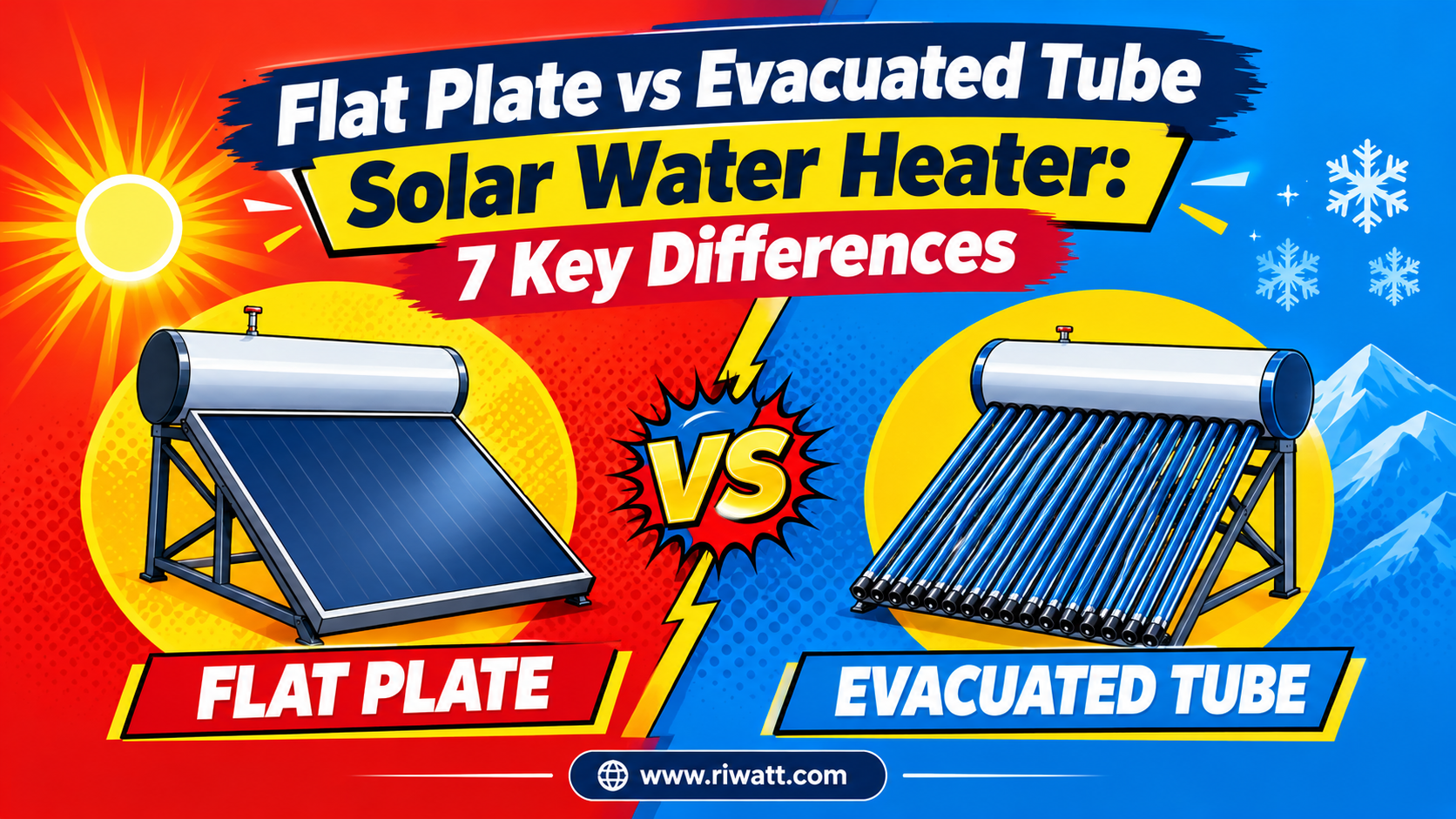
Both flat plate vs evacuated tube solar water heaters use sunlight to heat water, but their designs and thermal performance differ. Flat plate collectors use a flat absorber panel, while evacuated tube collectors use vacuum-insulated glass tubes to reduce heat loss.
Besides these design differences, what other key differences exist between these two types of solar water heaters?
In this blog post, we will explore 7 key differences, including collector design, thermal efficiency, weather performance, initial cost, installation, applications, and heat retention.
To understand these differences clearly, let’s first look at what flat plate vs evacuated tube solar water heaters are.
What Is a Flat Plate Solar Water Heater?
A flat plate solar water heater is a solar thermal system that uses a flat absorber plate to capture sunlight and convert it into heat for water heating. It typically consists of a transparent glass cover, a dark absorber plate, metal pipes, thermal insulation, and a protective outer frame.
When sunlight passes through the glass cover, the absorber plate collects solar energy and transfers the heat to water or a heat transfer fluid flowing through the connected pipes. The heated fluid then transfers its energy to the water stored in a tank, providing hot water for residential, commercial, and industrial applications.
For example, flat plate solar water heaters are commonly used in homes, hotels, and commercial buildings where consistent hot water is required. Their performance depends on sunlight availability, ambient temperature, collector design, and system installation.
For a detailed comparison of solar collector technologies, read our guide on Flat Plate vs Heat Pipe Solar Collectors: Which One Performs Better?
What Is an Evacuated Tube Solar Water Heater?
Unlike flat plate solar water heaters, evacuated tube solar water heaters use multiple glass tubes with a vacuum layer between the inner and outer glass walls to capture solar energy and reduce heat loss. This design helps maintain thermal performance when outdoor temperatures are low.
For a technical overview of flat plate and evacuated tube collector designs, see the U.S. Department of Energy’s solar thermal system guide.
For example, when sunlight reaches the absorber inside an evacuated tube, the absorber converts solar radiation into heat. This heat is transferred to the water directly or through a heat pipe, depending on the system design. The heated water then moves into a storage tank for residential, commercial, or industrial use.
For more information about solar water heating solutions, visit Riwatt Solar to explore products and solutions for different hot water requirements.
Key Differences Between Flat Plate Vs Evacuated Tube Solar Water Heaters
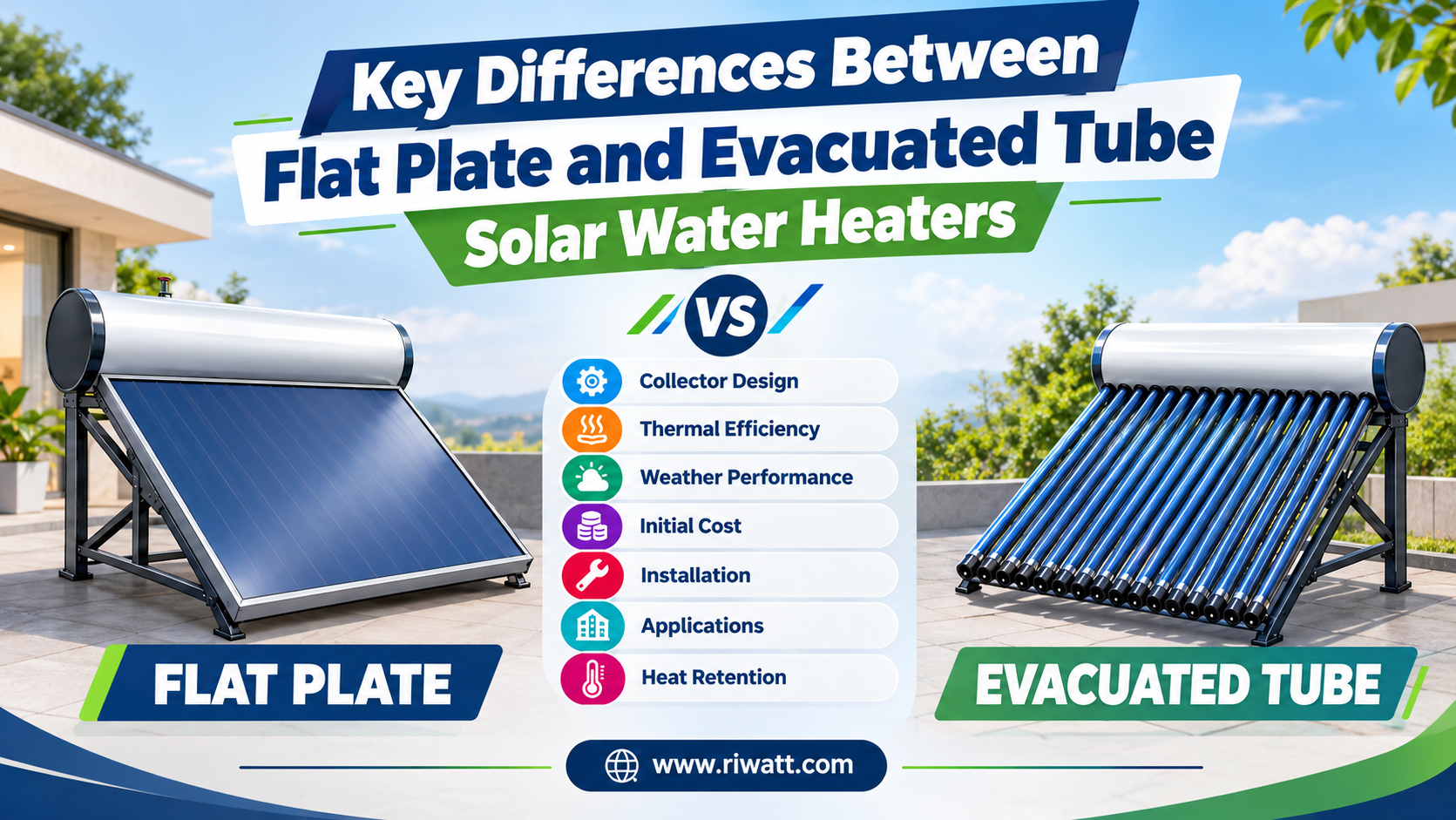
Simply knowing what flat plate and evacuated tube solar water heaters are is not enough; to choose the right system, we should clearly understand their differences.
Next, we will list 7 key differences of flat plate vs evacuated tube solar water heaters, including collector design, thermal efficiency, weather performance, initial cost, installation, maintenance, and durability.
| Item | Flat Plate Solar Water Heater | Evacuated Tube Solar Water Heater |
| Collector Design | Uses a flat absorber plate covered with glass and insulation. | Uses multiple vacuum-insulated glass tubes |
| Thermal Efficiency | Often performs well in warm climates, with efficiency depending on operating conditions and collector design. | Retains heat effectively in colder conditions due to vacuum insulation. |
| Weather Performance | Suitable for sunny weather but may lose more heat in cold and windy conditions. | Vacuum insulation reduces heat loss when outdoor temperatures are low. |
| Initial Cost | Often costs around $200-$800 for smaller systems, depending on capacity and market. | May cost around $250–$1,000 for smaller systems, depending on capacity and design. |
| Installation | Requires sufficient roof space and a stable mounting structure for broad panels. | Requires a suitable frame to support the glass tubes and connecting manifold. |
| Applications | Commonly used in homes, hotels, and commercial buildings in warm, sunny climates. | Suitable for residential, commercial, and industrial applications, especially in colder climates. |
| Heat Retention | Loses more heat when the temperature difference between the water and surrounding air increases. | Vacuum insulation reduces heat loss and helps maintain higher water temperatures in cold weather. |
1. Collector Design
Flat plate solar water heaters use a flat absorber plate covered with glass and insulation. The absorber captures sunlight and transfers heat to water flowing through connected pipes.
Evacuated tube solar water heaters use multiple glass tubes with a vacuum layer between the inner and outer walls. This design reduces heat loss and helps the system retain collected solar energy.
2. Thermal Efficiency
Flat plate solar water heaters perform well in warm, sunny climates where heat loss is relatively low. Their efficiency depends on absorber materials, insulation, solar radiation, and the required water temperature.
Evacuated tube solar water heaters offer effective thermal insulation because of their vacuum layer. This can improve performance in colder conditions, although actual efficiency depends on collector design and operating temperatures.
3. Weather Performance
Flat plate solar water heaters work effectively in regions with abundant sunlight and moderate temperatures. However, their heat loss can increase during cold and windy weather, affecting the temperature of the delivered water.
Evacuated tube solar water heaters reduce heat loss through vacuum insulation, helping them maintain performance when outdoor temperatures drop. Both systems produce less heat when sunlight is limited.
4. Initial Cost
Flat plate solar water heaters often have a competitive purchase price because their collector construction is relatively simple. The total cost depends on collector size, storage capacity, materials, and installation requirements.
Evacuated tube solar water heaters may have a higher initial cost depending on the tube design, manifold, and heat transfer mechanism. Buyers should compare complete-system prices rather than collector prices alone.
5. Installation
Flat plate solar water heaters require sufficient roof space and a stable mounting structure to support their broad collector panels. Proper orientation, tilt angle, and sunlight exposure are important for effective operation.
Evacuated tube solar water heaters require a supporting frame to hold the glass tubes and connecting manifold. Installers must also consider tube spacing, roof loading, plumbing connections, and access for maintenance.
6. Applications
Flat plate solar water heaters are commonly used in homes, hotels, and commercial buildings in warm, sunny climates. They are suitable for domestic hot water and other applications with compatible temperature requirements.
For additional information about solar water heating systems and their applications, consult the U.S. Department of Energy’s solar water heating overview.
Evacuated tube solar water heaters are used in residential, commercial, and selected industrial applications. They can be particularly useful in colder regions or projects where reducing heat loss is important.
7. Heat Retention
Flat plate solar water heaters rely on the collector’s glazing and insulation to minimize heat loss. Their heat retention generally decreases as the difference between the water temperature and outdoor temperature increases.
Evacuated tube solar water heaters use a vacuum layer to reduce heat transfer from the absorber to the surrounding air. This helps preserve collected heat, especially when outdoor temperatures are low.
Which One Should You Choose?
The above comparison of flat plate and evacuated tube solar water heaters highlights their key differences, but which type should you ultimately choose?
In short:
If you live in a warm, sunny region and want a straightforward solar water heating solution, a flat plate solar water heater may be the right choice. It is commonly used for residential and commercial hot water applications where weather conditions support effective solar heating.
If you live in a colder region or want to reduce heat loss in low outdoor temperatures, an evacuated tube solar water heater may be a better option. Its vacuum insulation helps retain heat, although actual performance depends on sunlight availability, system design, and operating conditions.
Advantages and Disadvantages of Flat Plate Solar Water Heaters
Advantages
- Flat Plate Solar Water Heaters Are Suitable for Sunny Climates: Flat plate collectors absorb solar radiation through a flat absorber plate and transfer heat to water. They can provide effective water heating in regions with abundant sunshine and moderate outdoor temperatures.
- Simple Collector Design: Flat plate solar water heaters use a flat absorber, transparent cover, pipes, and insulation. Their straightforward construction makes them a practical option for residential and commercial hot water applications.
- Better Heat Retention in Cold Weather: Evacuated tube solar water heaters use a vacuum layer between the glass walls to reduce heat loss. This helps them maintain thermal performance in colder conditions, although output still depends on sunlight availability.
- Suitable for Different Applications: Both types can supply hot water for homes, hotels, and commercial buildings. With suitable system sizing and design, evacuated tube systems can also meet certain industrial hot water requirements.
Disadvantages
- Performance Depends on Sunlight: Both flat plate and evacuated tube solar water heaters rely on solar radiation, so their heating performance may decrease during cloudy weather or periods of limited sunlight. Backup heating may be needed to maintain a consistent hot water supply.
Advantages and Disadvantages of Evacuated Tube Solar Water Heaters
Advantages
- Reduced Heat Loss: Evacuated tube solar water heaters use vacuum insulation to minimize heat loss, helping them maintain thermal performance in colder weather.
- Effective in Cold Climates: Their insulated glass tubes help collect and retain solar heat when outdoor temperatures are low, making them suitable for colder regions.
- Flexible Installation: Evacuated tube systems can be installed in residential and commercial buildings with suitable roof space and mounting structures.
Disadvantages
- Fragile Glass Tubes: The glass tubes can break due to impact or improper handling. Replacing damaged tubes may increase maintenance costs and require additional servicing.
Can You Use a Flat Plate Solar Water Heater in Cold Climates?
No, a flat plate solar water heater is not limited to warm climates, but its performance may decrease in cold weather.
Flat plate solar collectors absorb sunlight through a flat absorber plate and transfer the collected heat to water or a heat transfer fluid. However, when outdoor temperatures are low, the temperature difference between the collector and surrounding air increases, which can lead to greater heat loss.
As a result, the system may heat water less effectively during cold or windy conditions. Proper insulation, suitable system design, and backup heating can help maintain hot water availability.
Therefore, flat plate solar water heaters can still be used in colder regions, but their performance should be evaluated against local weather conditions and hot water requirements.
Can You Use an Evacuated Tube Solar Water Heater in Warm Climates?
Yes, evacuated tube solar water heaters can be used in warm climates as well as colder regions.
These systems use glass tubes with a vacuum layer that reduces heat loss from the absorber. This insulation can help retain collected heat, but it does not automatically mean an evacuated tube system will outperform a flat plate collector in every climate.
In regions with strong sunlight and moderate temperatures, both types can provide effective water heating. The better option depends on the required water temperature, system capacity, installation conditions, budget, and local climate.
Therefore, evacuated tube solar water heaters are not exclusively for cold climates. Compare both collector types against your project requirements before making a decision.
How Do You Choose the Right Solar Water Heater?
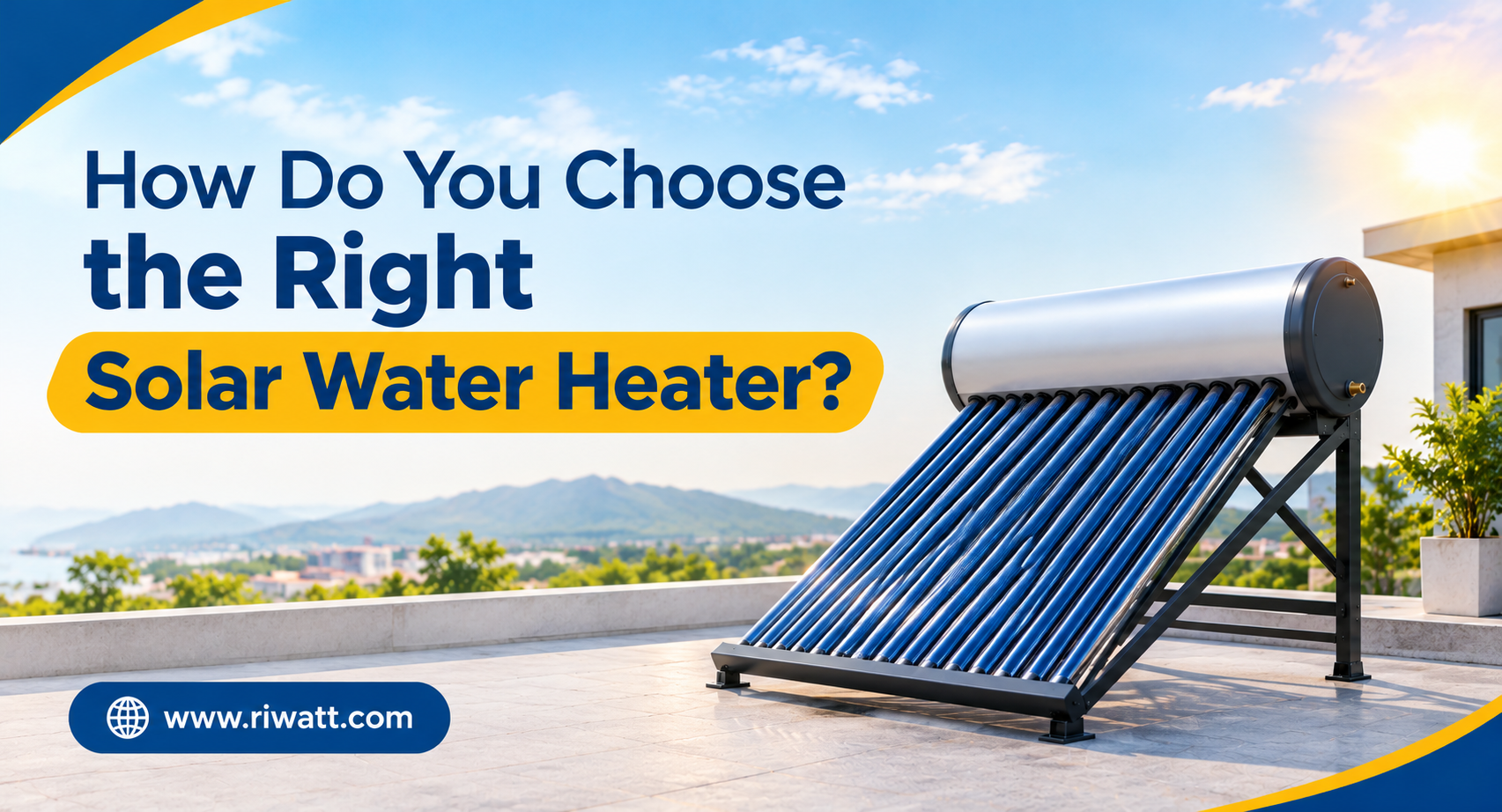
After comparing flat plate and evacuated tube solar water heaters, you should now have a general understanding of their designs, thermal performance, and applications.
The next question is: how do you choose the right solar water heater for your home or commercial project?
A flat plate solar water heater may be the right choice in the following situations:
- You live in a region with warm temperatures and plenty of sunshine.
- You need a solar water heating system for residential or commercial use.
- Your project requires a straightforward collector design.
- Your budget and available roof space favor a flat plate system.
If you want to:
- Reduce heat loss in colder outdoor conditions,
- Maintain effective heating when ambient temperatures are low,
- Supply hot water in regions with variable weather conditions,
- Meet residential or commercial hot water requirements with suitable system sizing,
- Improve heat retention through vacuum insulation,
then an evacuated tube solar water heater may be the better choice.
Before making your final decision, compare local weather conditions, daily hot water demand, installation costs, available roof space, and the system’s expected performance.
Conclusion
In summary, flat plate solar water heaters are suitable for sunny climates, while evacuated tube solar water heaters retain heat more effectively in colder conditions.
At Riwatt Solar, we offer solar water heating solutions for different applications.
If you are looking for a suitable solar water heater, please contact Riwatt Solar for more information.

Leave A Comment
Your email address will not be published.